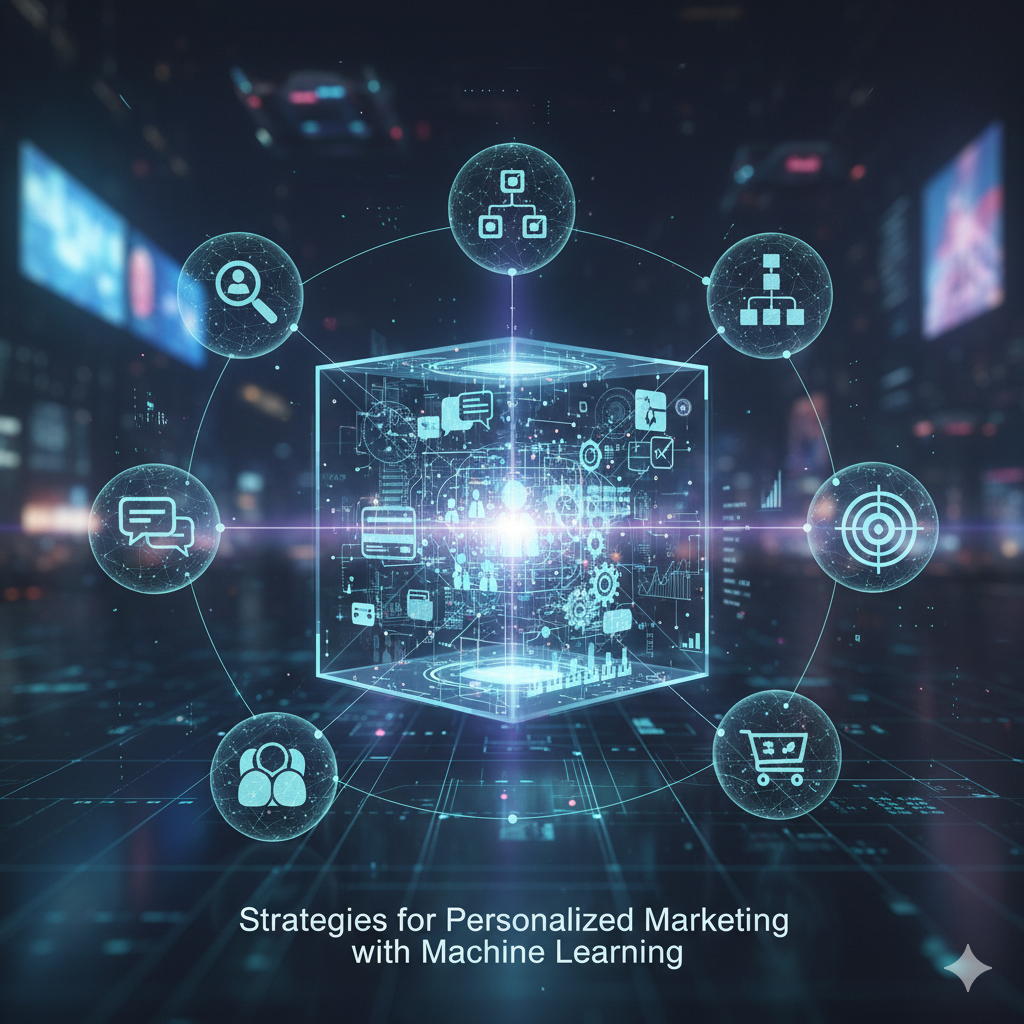






You’re scrolling through your email late at night, and suddenly, a coupon pops up-not just any deal, but one tailored perfectly to your weekend plans in the city. It knows you’ve been eyeing rideshares for that upcoming concert because it remembers your last few trips. That’s not magic; that’s personalized marketing with machine learning at work. At Lyft, they’ve been pioneering this since 2018, turning vague business goals like “boost passenger rides” into laser-focused campaigns that keep drivers busy without blowing the budget. Fast-forward to 2026, and this isn’t just a rideshare trick-it’s the backbone of marketing across industries, driving everything from retail recommendations to B2B lead nurturing.
In this post, we’ll dive deep into how machine learning marketing personalization is reshaping customer experiences. Drawing from Lyft’s engineering playbook and fresh 2026 trends, you’ll get actionable strategies, backed by stats like how 88% of marketers now weave AI into their daily workflows. Whether you’re a small business owner dipping your toes into customer segmentation with AI or a seasoned CMO optimizing predictive marketing analytics, these insights will help you craft campaigns that feel personal, not pushy. Let’s roll.
Table of Contents
What Is Personalized Marketing with Machine Learning?
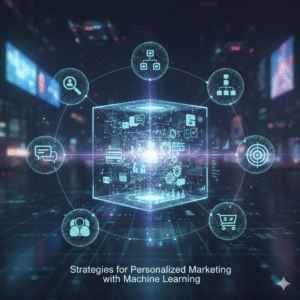
At its core, personalized marketing with machine learning uses algorithms to analyze vast datasets—think past purchases, browsing history, and even real-time location—to deliver hyper-relevant content to individuals. Gone are the days of blasting the same email to your entire list. Instead, ML models sift through data to predict what each customer wants, when they want it.
Take Lyft’s approach: They reformulated a simple ask Get more passengers on the road into a predictive powerhouse. By building models to forecast incremental rides , they ensure offers land with precision, avoiding waste. In 2026, this evolves with generative AI, where tools don’t just recommend but create custom visuals or messages on the fly.
Why does it matter? A staggering 73% of business leaders see AI as the key to redefining personalization, with 92% already using it for growth. It’s not hype; it’s a shift toward personalized customer engagement that boosts satisfaction by 52% for those who nail it. But getting there requires blending data science with creativity more on that soon.
The Evolution of Marketing: From Mass Blasts to AI Precision
Remember when marketing meant billboards and generic flyers? That era peaked in the 1990s, but by 2026, targeted marketing optimization rules the roost. The pivot started with basic segmentation in the early 2000s, but ML turbocharged it. Today, marketing data science lets brands like Netflix predict churn before it happens, using behavior prediction in marketing to nudge users back.
Lyft’s story fits perfectly here. Facing driver oversupply, their team used tree-based models to predict how offers would perform across passenger segments, optimizing for both volume and cost variance. This isn’t theoretical-it’s led to sustainable growth in ridesharing, a model now emulated in e-commerce and finance.
Current trends? Hyper-personalization at scale is exploding, with AI handling real-time tweaks across channels. Deloitte’s 2026 report highlights automation and GenAI as game-changers, enabling 40% of marketing budgets to flow toward personalization efforts. The result? Campaigns that adapt mid-flight, like dynamic pricing emails that shift based on your app activity.
If you’re starting out, consider this real-world scenario: A coffee chain uses ML models for marketing automation to segment loyalists versus occasional visitors. For the former, it’s VIP invites to tastings; for the latter, flash discounts. Engagement jumps 30%, per similar retail cases.
Click here to know about How Machine Learning Improve Netflix Streaming Quality: 7 Proven Tips
How Machine Learning Improves Personalized Marketing Campaigns
Ever wonder how does machine learning improve personalized marketing campaigns? It boils down to three pillars: prediction, automation, and iteration. ML crunches historical data to forecast responses, then automates delivery via personalization algorithms in advertising.
Lyft nailed this by estimating “counterfactuals” what would happen without an offer using supervised learning on randomized test data. In practice, this means sending a $5 ride credit to urban night owls who book late, not everyone.
Stats back it up: 59% of global marketers call AI personalization the top trend for 2026 impact. Here’s how to apply it:
- Start with Clean Data: Feed models user demographics, transaction history, and engagement logs. Tools like Google Cloud ML make this seamless.
- Layer in Real-Time Inputs: Integrate IoT or app data for AI-driven campaign optimization, adjusting offers as behaviors shift.
- Test and Scale: Run A/B experiments, then let ML optimize winners automatically.
A quick tip: If variance worries you, incorporate stochastic models to cap overruns at 5% probability. This keeps campaigns predictable, even in volatile markets.
Mastering Customer Segmentation with AI
Customer segmentation with AI takes guesswork out of grouping users. Traditional methods rely on demographics; ML adds psychographics and behaviors for granular slices.
Lyft segments passengers by predicted ride lift, assigning coupons to high-response groups while respecting budget caps via linear optimization. What machine learning models are used for customer segmentation? Often, it’s clustering algorithms like K-means or gradient boosting trees for interpretability.
In 2026, expect neural networks for deeper insights, per Harvard’s outlook on AI in marketing. Case in point: Coca-Cola’s AI personalization segmented fans by social sentiment, boosting campaign ROI by 25% through tailored social ads.
Pro Tips for Implementation:
- Use unsupervised learning for discovery (e.g., DBSCAN for outlier detection).
- Validate segments with lift tests—aim for 15-20% response variance.
- Refresh quarterly to combat data drift.
Predictive Marketing Analytics: The Crystal Ball for Engagement
Predictive marketing analytics is where ML shines, forecasting behaviors to preempt needs. How to use predictive analytics to personalize offers? Train models on time-series data to spot patterns, like seasonal spikes.
Lyft’s models predict costs and rides per segment, optimizing assignments to max incremental value. Extend this to how can ML improve customer lifetime value through targeted engagement by scoring users on churn risk and deploying retention nudges.
Research shows predictive tools lift retention by 20-30% in e-commerce. Trends for 2026? Real-time analytics via edge computing, enabling in-app predictions.
Example Breakdown:
- Data Inputs: RFM (Recency, Frequency, Monetary) scores plus external factors like weather.
- Model Choice: XGBoost for speed; LSTMs for sequential data.
- Output Action: Auto-generate personalized upsell emails.
Brands like Starbucks use this for app offers, seeing 40% revenue bumps from AI tweaks. Ethical note: Always anonymize data to stay privacy-compliant.
AI-Driven Campaign Optimization: Tips and Tools
Targeted marketing optimization via AI isn’t set-it-and-forget-it—it’s a loop of predict, deploy, measure. Should marketers use neural networks or tree-based models for campaign prediction? Trees for quick wins; nets for complexity.
Lyft’s pipeline: Experiment, model, optimize with constraints like P(cost ≤ budget) ≥ 95%. In 2026, platforms like Braze automate this, improving segmentation accuracy by 35%.
5 Essential Tools for 2026:
- HubSpot AI: For platforms offering automated personalization insights for marketing teams.
- Adobe Sensei: Excels in AI software for targeted customer engagement campaigns.
- Google Analytics 4 ML: Free predictive scoring.
- Dynamic Yield: Best predictive analytics software for digital marketers 2026.
- Optimizely: A/B testing with ML uplift modeling.
Real-World Case Studies: Lessons from the Trenches
Nothing beats stories. Examples of machine learning personalization in ridesharing platforms? Lyft’s coupon system generated targeted lifts without marketplace disruption.
Broader wins:
- Coca-Cola: AI chatbots personalized vending interactions, upping sales 18%.
- Retail Giant (Anon): Hyper-personalization via SuperAGI cut cart abandonment by 25%, using real-time analytics.
- ABM in B2B: SingleGrain’s ML models scored accounts, boosting pipeline by 40%.
Case studies of predictive analytics improving customer retention show averages of 15% uplift, but the real magic is in iteration—Lyft retrains models weekly to fight drift. McKinsey’s 2026 deep-dive on scaling personalization.
Benefits, Challenges, and Ethical Considerations
The upsides? What are the benefits of AI in marketing personalization? Higher ROI, deeper loyalty, and efficiency—88% of marketers report time savings.
Challenges: Data silos, model bias, and privacy. Are personalization algorithms ethical and privacy-compliant? Yes, if you follow GDPR and use federated learning. Lyft stresses logging experiments for transparency.
Is AI personalization reliable for marketing performance? When tuned right, absolutely variance control ensures 90%+ accuracy in predictions.
Best Practices for Machine Learning for Cross-Channel Marketing Optimization
Best practices for AI-based customer segmentation include hybrid models and cross-validation. For machine learning for cross-channel marketing optimization:
- Unify data across email, social, app.
- A/B test ML variants.
- Monitor for equity—avoid biased segments.
Story time: A mid-sized retailer I advised switched to ML-orchestrated emails and SMS, lifting open rates 22%. Start small: Pilot one channel, scale with wins.
FAQ: Answering Your Top Questions
What machine learning models are used for customer segmentation?
K-means for clustering, random forests for classification choose based on data scale.
How does machine learning improve personalized marketing campaigns?
By predicting responses and automating delivery, cutting waste by 20-30%.
What are the benefits of AI in marketing personalization?
Up to 40% revenue growth, per brand studies.
Can small businesses use machine learning for personalized marketing?
Yes! Start with affordable APIs like OpenAI’s embeddings.
Is AI personalization reliable for marketing performance?
Reliable with ongoing training—aim for 85%+ precision.
Final Thoughts: Ignite Your ML Marketing Revolution
From Lyft’s foundational wins to 2026’s AI frontiers, personalized marketing with machine learning equips you to create connections that convert. Pick one strategy say, AI segmentation and test it this week for quick wins.
Fuel your journey with Personalized Marketing Internship Opportunities on Careerswami