
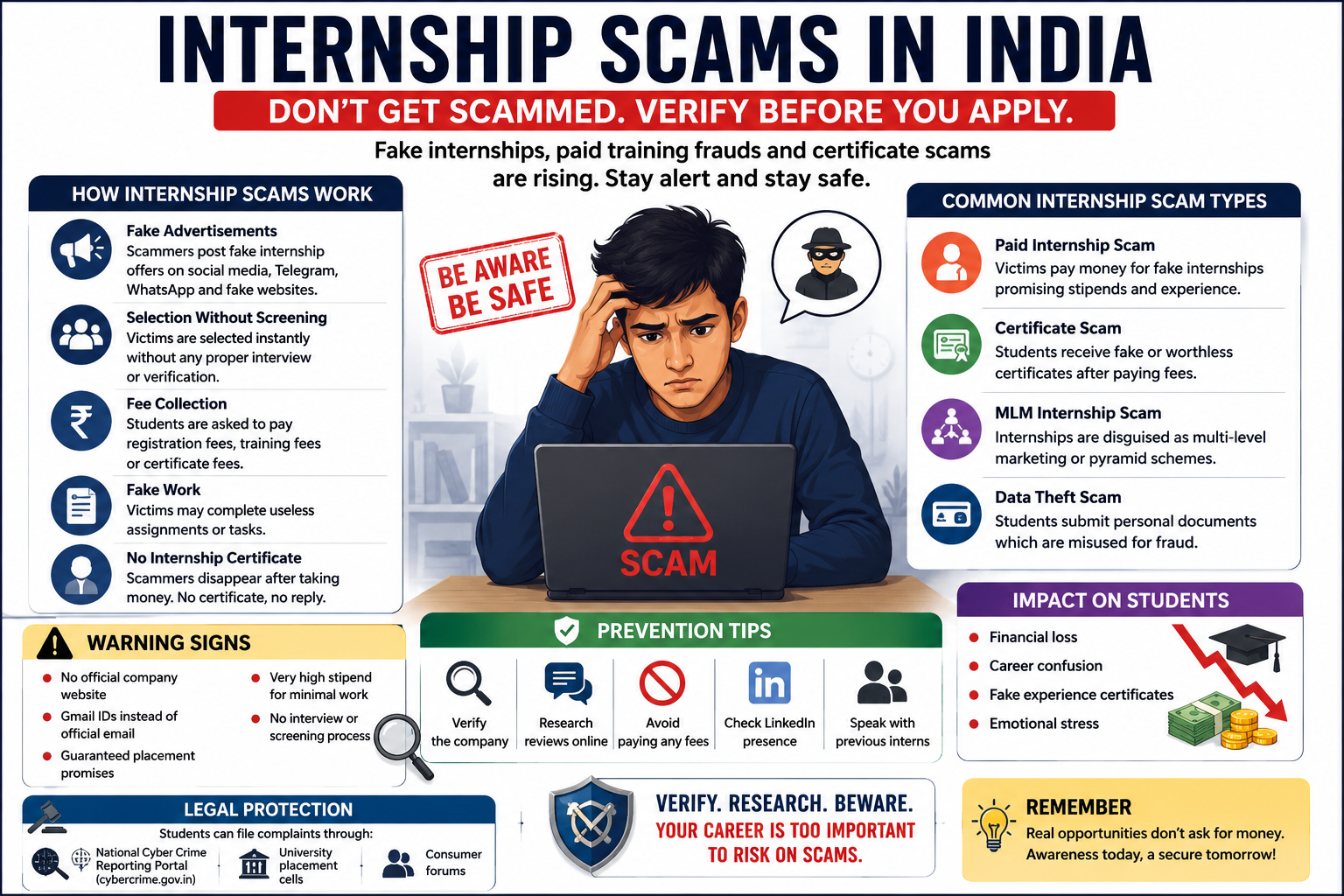






Internship scams in India are becoming common in India, especially among students and fresh graduates. Fraudsters target people seeking experience, certificates, and career opportunities.
- These scams involve:
- Fake internship offers
- Paid training fraud
- Certificate scams
- Fake placement promises
How Internship Scams Work
Fake Advertisements
- Scammers post fake internships on:
- Social media
- Telegram
- Fake websites
Selection Without Screening
Victims are selected instantly.
Fee Collection
- Students are asked to pay:
- Registration fees
- Training fees
- Certificate fees
Fake work
Victims may complete useless assignments.
No Internship Certificate
Scammers disappear afterward.
Common Types of Internship Scams in India
Paid Internship Scam
Victims pay money for fake internships.
Certificate Scam
Students receive fake certificates.
MLM Internship Scam
Internships are disguised pyramid schemes.
Data Theft Scam
Students submit sensitive personal documents.
Warning Signs
- No company website
- Gmail IDs instead of official email
- Guaranteed placement promises
- Very high stipend
- No interview
Impact on Students
- Victims face:
- Financial loss
- Career confusion
- Fake experience certificates
- Emotional Stress
Prevention
- Verify companies
- Research reviews
- Avoid paying fees
- Check LinkedIn presence
- Speak with previous interns
Legal Protection
- Students can file complaints through:
- Cybercrime portal
- University placement cells
- Consumer forums
Expanded Content for “Internship Scams in India”
Internship Scams in India are increasing rapidly as more students and fresh graduates search for career opportunities, work experience, and skill development programs online. Fraudsters target students through fake internship advertisements, paid training schemes, certificate scams, and false placement promises. Many students become victims because scammers take advantage of their excitement, lack of experience, and urgency to build strong resumes.
Today, internship opportunities are widely shared on social media platforms, Telegram groups, WhatsApp messages, LinkedIn, and fake job websites. While many opportunities are genuine, scammers create fake company profiles and attractive offers to trap students. These fraudsters often promise high stipends, guaranteed placements, work-from-home opportunities, free laptops, and quick selection processes to gain attention.
Fake Selection Process
One major warning sign of internship scams is the absence of a proper selection process. Genuine companies usually conduct interviews, skill assessments, or technical rounds before selecting candidates. Scammers, however, often select students immediately after application.
Victims may receive congratulation emails or WhatsApp messages saying:
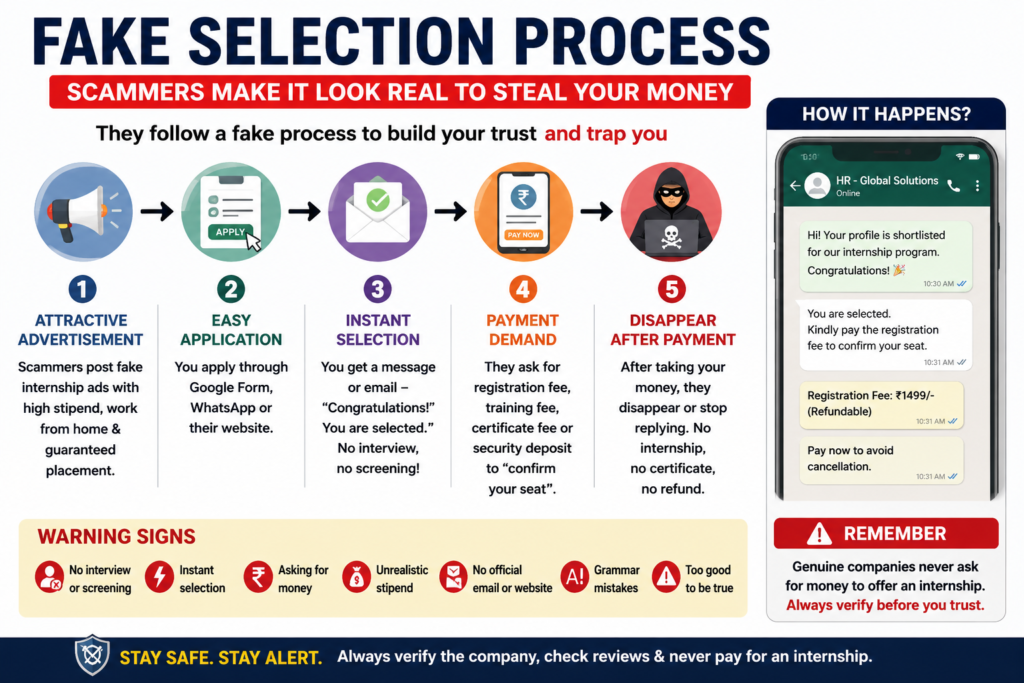
- “You are selected”
- “Limited seats available”
- “Pay now to confirm your position”
- “Training starts immediately”
- These messages are designed to create excitement and urgency so students make quick decisions without verification.
Registration Fees and Fake Payments
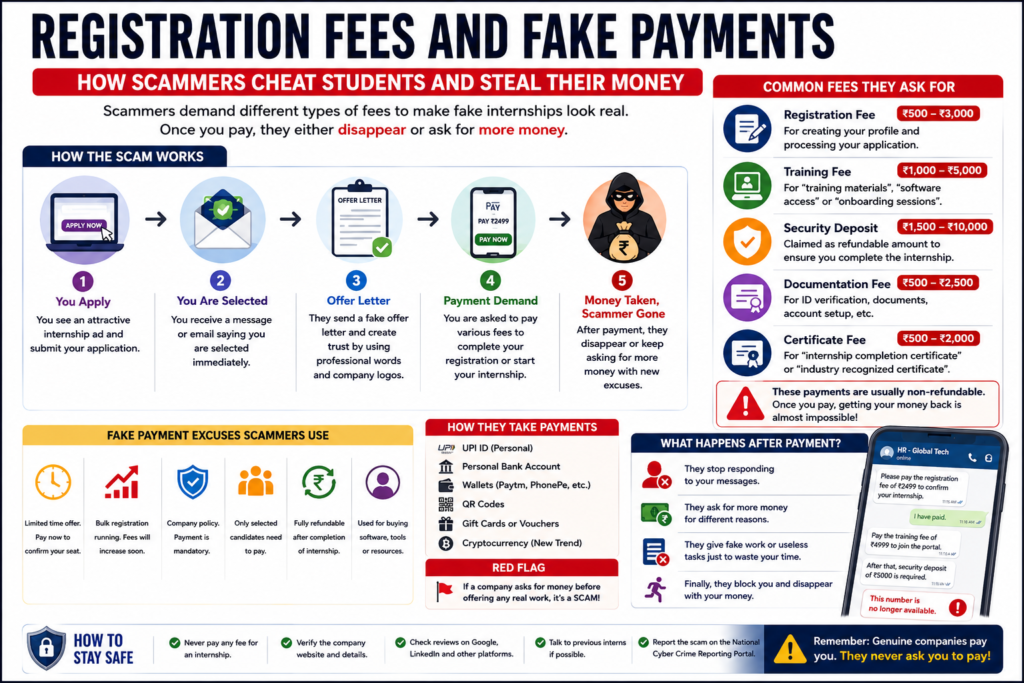
- After selection, students are asked to pay various charges such as:
- Registration fees
- Training fees
- Security deposits
- Documentation charges
- Certificate fees
- Scammers may claim these payments are refundable after internship completion. In reality, once the money is transferred, fraudsters either disappear completely or continue demanding additional payments. Some scammers even provide fake offer letters and fake internship portals to make victims believe the internship is real.
How Students Can Stay Safe
Students should always verify internship offers before accepting them. Important safety measures include:
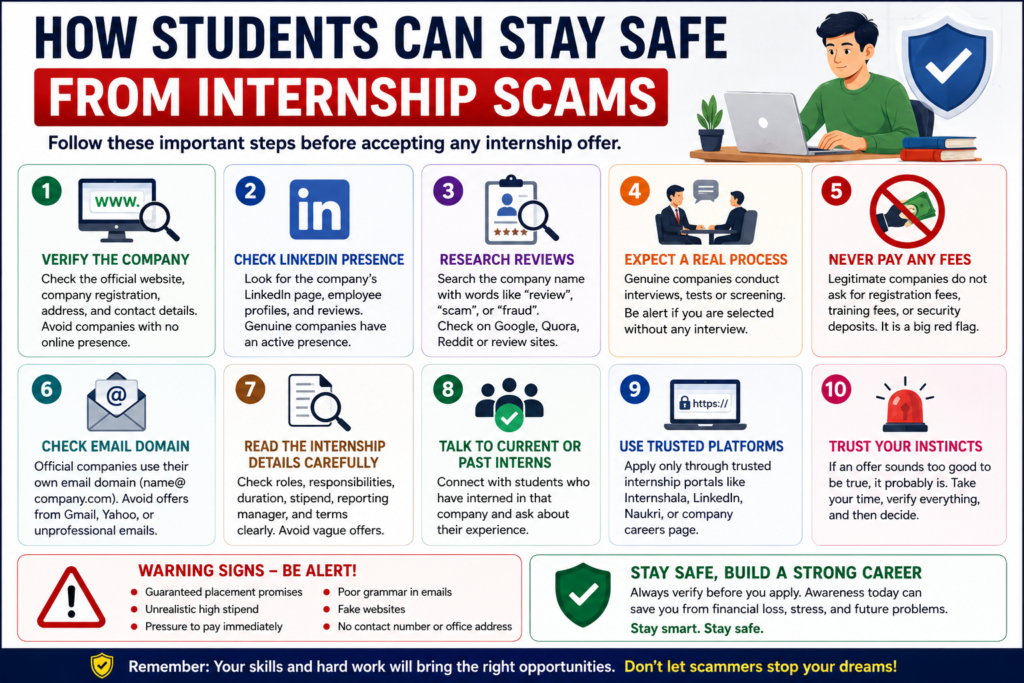
- Checking official company websites
- Verifying LinkedIn profiles
- Reading online reviews
- Confirming company registration
- Avoiding unnecessary payments
- Speaking with previous interns
- Using trusted internship platforms
Students should also learn about Telegram Job Scam in India to better understand online recruitment frauds.
Victims can report internship scams through the National Cyber Crime Reporting Portal and seek support from university placement cells or local cybercrime departments.
Conclusion
Internship scams exploit students’ desire for experience and career growth. Verification and awareness are crucial before accepting internship offers.
FAQs
Are paid internships fake?
Not all, but many scam internships demand unnecessary fees.
Is paying for certificates normal?
Usually no.
Can fake internships affect careers?
Yes, fake experience may create problems later.
How can students verify internships?
Check company registration and LinkedIn presence.
What if I already shared documents?
Report immediately and monitor misuse.