







ML Engineers vs Software Engineers Career Path is one of the most searched and debated topics among tech students and professionals in 2026. With the rapid growth of artificial intelligence and software development, choosing between these two career paths has become more confusing than ever.
In 2026, one of the biggest career dilemmas for tech students and professionals is choosing between becoming a Machine Learning Engineer (MLE) or a Software Engineer (SWE). As artificial intelligence continues transforming industries and software development remains the backbone of the tech world, both career paths offer exciting opportunities, high salaries, and long-term growth.
However, despite their similarities, the day-to-day work, technical skills, learning curve, and career trajectories of ML Engineers and Software Engineers are very different. Many beginners enter these fields based on hype, social media trends, or salary expectations without fully understanding what each role actually involves.
That is why understanding the difference between the ML Engineers vs Software Engineers Career Path is more important than ever in 2026. Whether you are a computer science student, a self-taught programmer, or a working professional planning a career switch, choosing the right path can significantly impact your future growth, job satisfaction, and earning potential.
In this guide, we will compare Machine Learning Engineers and Software Engineers based on required skills, coding responsibilities, salaries, job demand, career growth, work-life balance, and future opportunities so you can confidently decide which career track is right for you.

What is a Software Engineer
A Software Engineer is responsible for building, designing, and maintaining software systems, applications, and infrastructure.
Key Responsibilities:
- Writing clean, scalable code
- Building web/mobile/backend systems
- Working with databases and APIs
- Debugging and optimizing performance
- Collaborating with product teams
Technologies Used:
- Languages: Java, Python, C++, JavaScript
- Frameworks: React, Node.js, Spring Boot
- Databases: MySQL, MongoDB
- Tools: Git, Docker, Kubernetes
What is a Machine Learning
A Machine Learning Engineer builds intelligent systems that learn from data and make predictions.
Key Responsibilities:
- Designing ML models
- Training and optimizing algorithms
- Data preprocessing and feature engineering
- Deploying ML models into production
- Monitoring model performance
Technologies Used:
- Languages: Python (main)
- Libraries: TensorFlow, PyTorch, Scikit-learn
- Tools: MLflow, Docker, Kubernetes
- Data tools: Pandas, NumPy
Example:
An MLE might build a recommendation system for an e-commerce platform or a fraud detection model.
The 2026 market: what's changed
| Dimension | SWE 2026 | MLE 2026 |
|---|---|---|
| Job Volume | High — demand across almost every industry | Moderate — mostly in AI-first and tech-heavy companies |
| Entry Barrier | Lower — self-taught and bootcamp routes still work | Higher — strong math/ML foundation often required |
| Automation Risk | Medium — AI tools automate repetitive coding tasks | Lower — research thinking and modeling remain valuable |
| Remote Work | Very common — hybrid and remote widely available | Common — some research/lab roles need on-site work |
| Specialization | Broad — frontend, backend, DevOps, cloud, security, etc. | Deep — NLP, CV, RL, recommendation systems, LLMs |
| Career Switching | Easier — transferable skills across domains | Harder — expertise takes longer to build |
| Salary Growth | Stable and consistent across levels | High at senior/specialized levels |
| Learning Curve | Faster to enter industry | Longer learning and research cycle |
| Best For | Builders, product engineers, generalists | Research-oriented and math-heavy problem solvers |
| Future Outlook | Strong long-term demand with AI-assisted workflows | Strong but competitive niche market |
ML Engineers vs Software Engineers Career
The biggest difference in the ML engineers vs software engineers career lies in what you build.
Factor
Focus
Core Skill
Work Type
Input
Output
Software Engineers
Software systems
Coding
Deterministic logic
User requirements
Applications
ML Engineers
Data-driven models
Coding + Math + Data
Probabilistic models
Data
Predictions/insights
Skills Required: ML Engineers vs Software Engineers

Software Engineers Skills
- Strong Data Structures & Algorithms
- System Design
- Clean coding practices
- Debugging skills
- Backend/frontend knowledge
Machine Learning Engineers Skills
- Statistics & Probability
- Linear Algebra
- Machine Learning algorithms
- Data handling
- Model deployment (MLOps)
👉 Important Insight:
If you dislike math and statistics, MLE might feel overwhelming
Salary Comparison in 2026
The ML engineers vs software engineers salary comparison in 2026.
India (Average Range):
- SWE: ₹6 LPA – ₹40 LPA+
- MLE: ₹8 LPA – ₹50 LPA+
Global (USA):
- SWE: $90K – $180K
- MLE: $110K – $200K+
👉 Why MLE earns more?
Because it requires specialized knowledge + fewer skilled professionals.
Demand and Job Market in 2026 – Software Engineer
Software Engineer
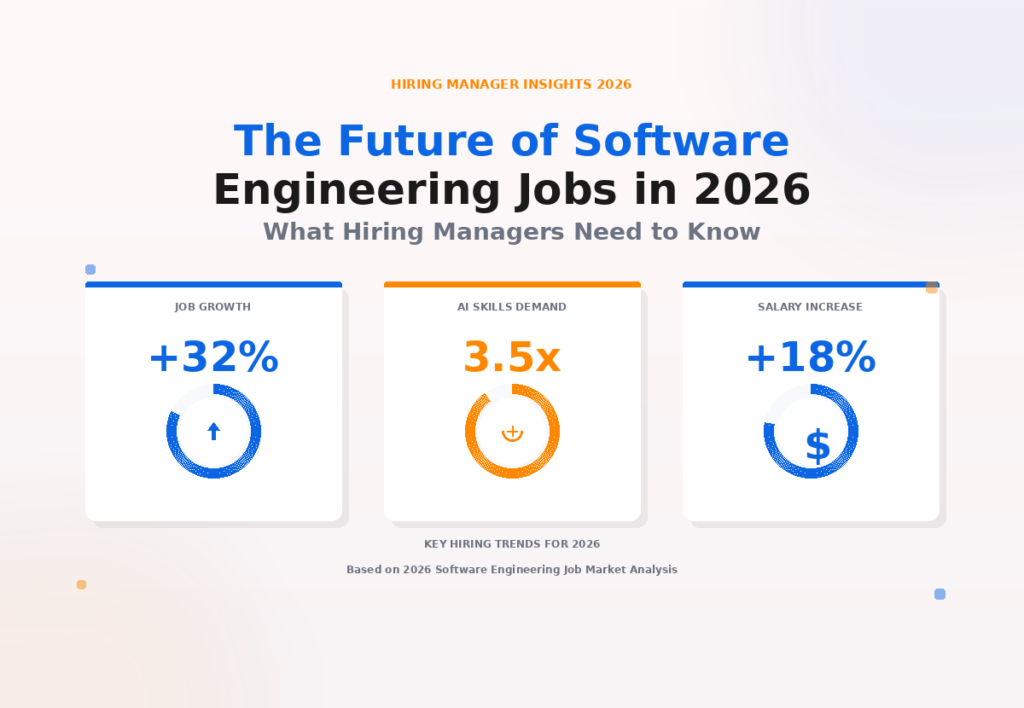
In 2026, software engineers continue to be the backbone of the technology industry, with strong and stable demand across almost every sector. From startups building new apps to large enterprises managing complex systems, every organization depends on software to run its operations efficiently.
This widespread reliance creates a huge number of job opportunities in areas like web development, mobile applications, cloud computing, and backend systems.
One of the biggest advantages of pursuing a software engineering path is that entry-level roles are relatively easier to find compared to more specialized fields. Companies are constantly hiring fresh graduates and beginners who have strong coding fundamentals, problem-solving skills, and basic project experience.
Career Growth Path
- Junior Developer
- Software Engineer
- Senior Engineer
- Tech Lead
- Engineering Manager
Machine Learning Engineer
In 2026, machine learning engineers are in rapidly growing demand as more companies adopt artificial intelligence to improve their products and services. Industries such as healthcare, finance, e-commerce, and automation are increasingly relying on data-driven systems like recommendation engines, fraud detection models, and predictive analytics.
This has created a strong need for professionals who can design, train, and deploy machine learning models effectively. However, despite the rising demand, breaking into this field is not easy.
Entry-level opportunities are fewer compared to software engineering, and the competition is much higher. Most companies expect candidates to have a solid understanding of mathematics, statistics, and programming, along with hands-on experience in real-world projects or internships.
Career Growth Path
- Data Analyst (optional entry)
- ML Engineer
- Senior ML Engineer
- AI Architect
- Research Scientist
When Should You Choose Software Engineering?
You should choose software engineering if you genuinely enjoy coding and building practical applications such as websites, mobile apps, or backend systems. This career path is ideal for individuals who like solving logical problems, working on structured tasks, and seeing immediate results from their work.
Software engineering is also a great option if you want a faster and more accessible entry into the tech industry, as there are more entry-level opportunities available compared to specialized fields. It suits those who prefer a relatively predictable workflow, where requirements are defined and solutions are built step by step.
When Should You Choose Machine Learning Engineering?
You should choose machine learning engineering if you are genuinely interested in working with data, building intelligent systems, and exploring how machines can learn patterns and make decisions.
This career path is ideal for those who enjoy mathematics, statistics, and analytical thinking, as these concepts form the core of machine learning. It suits individuals who are curious about artificial intelligence applications like recommendation systems, chatbots, image recognition, and predictive analytics.
Machine learning engineering is also a good choice if you are willing to invest more time in learning complex concepts and are comfortable with a slower start in terms of job opportunities. Unlike traditional software roles, this field often involves experimentation, model tuning, and continuous improvement, which makes it exciting for those who enjoy research-oriented and problem-solving work.
Real-Life Scenario Comparison
Scenario 1:
You enjoy solving coding problems on platforms like LeetCode
👉 Go for SWE
Scenario 2:
You enjoy analyzing data and patterns
👉 Go for MLE
Scenario 3:
You want a job quickly after college
👉 SWE is easier
Scenario 4:
You want high-paying niche roles
👉 MLE is better
Tools & Platforms to Learn
In 2026, choosing the right learning platform can make a huge difference in how quickly and effectively you grow in the ML engineer vs software engineer career path. Many beginners struggle not because of a lack of resources, but because of too many scattered materials and no clear direction.
This is where structured platforms like Gururo are becoming increasingly popular among students and aspiring developers.
Gururo focuses on providing a guided and practical approach to learning, which is especially helpful for beginners who often feel lost while switching between YouTube tutorials, courses, and documentation. Instead of random learning, Gururo offers step-by-step learning paths designed for both Software Engineering (SWE) and Machine Learning Engineering (MLE).
If you are starting from scratch, using platforms like Gururo can help you avoid confusion and stay consistent.
If you want to explore structured learning paths and start building industry-ready skills, you can check out Gururo here:
Overall, platforms like Gururo are valuable because they combine learning, practice, and interview preparation in one place, helping you move from beginner to job-ready in a more organized and efficient way.
Common Mistakes to Avoid
1. Choosing MLE Just for Salary
Many people choose MLE because it pays more—but quit because of math complexity.
2. Ignoring Fundamentals
Strong basics in DSA (for SWE) or math (for MLE) are essential.
3. Not Building Projects
Theory alone won’t get you hired.
4. Switching Too Early
Give at least 6–12 months before switching paths.
Step-by-Step Decision Framework
Step 1: Identify Your Core Interest
Start by understanding what genuinely excites you more. If you enjoy building websites, apps, APIs, scalable systems, or solving software architecture problems, Software Engineering (SWE) may be the better fit. If you are more interested in artificial intelligence, data patterns, model training, and how machines learn from information, Machine Learning Engineering (MLE) is likely a stronger match.
Step 2: Evaluate Your Comfort with Mathematics
MLE requires a strong understanding of mathematics, especially statistics, probability, linear algebra, and optimization concepts. If you enjoy analytical thinking and math-heavy problem solving, MLE can be a rewarding path. If you prefer practical coding, system development, and product engineering over theoretical math, SWE is usually more suitable.
Step 3: Understand the Learning Curve
Software Engineering generally offers a faster and more accessible entry into the tech industry. Many developers become job-ready through self-learning, bootcamps, or online courses. Machine Learning Engineering has a steeper learning curve because it combines software development with AI theory, research concepts, and data science knowledge.
Step 4: Think About the Type of Work You Want Daily
SWE professionals typically spend their time building features, debugging applications, improving system performance, and collaborating on product development. MLE professionals often work with datasets, train and fine-tune models, evaluate AI performance, and optimize machine learning pipelines. Your preferred daily workflow can help guide your decision.
Step 5: Compare Career Flexibility
Software Engineering provides broader flexibility because software skills transfer easily across industries such as fintech, healthcare, e-commerce, gaming, and SaaS. MLE is more specialized and often tied to AI-focused companies or advanced technology teams. If you want maximum career mobility, SWE may offer more options.
Step 6: Analyze the 2026 Job Market
In 2026, SWE roles continue to exist across almost every company and industry, making job opportunities more widespread. MLE roles are growing rapidly but are concentrated mainly in AI-first companies, research-driven organizations, and advanced tech startups. The competition for MLE roles is also higher due to the specialized skill requirements.
Step 7: Consider Your Long-Term Career Goals
If your long-term goal is to become a Software Architect, Engineering Manager, Full-Stack Developer, or Cloud Engineer, SWE is the natural path. If you aim to work on LLMs, recommendation systems, AI infrastructure, or become an AI Researcher or Applied Scientist, MLE aligns better with those ambitions.
Step 8: Make the Final Decision Based on Strength + Interest
The best career choice is the one that matches both your natural strengths and long-term interest. Choose SWE if you enjoy broad software development and product engineering. Choose MLE if you are passionate about AI, experimentation, and intelligent systems. In 2026, both careers offer strong opportunities, but success in either field depends on consistent learning and specialization.
FAQ
What programming languages are most important for SWE and MLE?
Software Engineers commonly use languages like Java, JavaScript, C++, Go, and Python for building applications and scalable systems. Machine Learning Engineers mainly rely on Python because of its strong AI and data science ecosystem, along with libraries such as TensorFlow, PyTorch, and Scikit-learn.
Can a Software Engineer switch to Machine Learning later?
Yes, many professionals successfully transition from Software Engineering to Machine Learning Engineering. A strong programming background helps significantly, but additional skills in mathematics, machine learning algorithms, data processing, and model deployment are usually required for the transition.
Which career has more job opportunities in 2026?
Software Engineering continues to offer a larger number of job opportunities across industries because almost every company needs software development. However, Machine Learning Engineering is growing rapidly due to the expansion of artificial intelligence, automation, and data-driven technologies in 2026.
What skills are required to become a Machine Learning Engineer in 2026?
To become a Machine Learning Engineer in 2026, candidates typically need strong Python programming skills, understanding of machine learning algorithms, data preprocessing, mathematics, statistics, model training, and experience with AI frameworks like TensorFlow or PyTorch. Knowledge of cloud platforms and MLOps is also becoming increasingly important.
What is the real difference between an MLE and a SWE?
A Software Engineer designs and ships production systems, APIs, and user-facing features optimizing for reliability, scalability, and user experience. A Machine Learning Engineer trains, fine-tunes, and deploys ML models – optimizing for model performance, data pipeline quality, and inference efficiency. Both write significant code; the difference is what they’re building and what metric defines success.
Which pays more in 2026-MLE or SWE?
MLEs earn a modest premium at mid-level: roughly $180K-$310K total comp vs $160K-$260K for SWEs in the US. However, top-tier SWEs at FAANG can exceed $350K, and strong startup equity can outperform any base salary premium. The MLE premium is narrowing as ML skills become less scarce – the biggest MLE earners now differentiate on research intuition, not credentials alone.
Conclusion
The debate around the ML Engineers vs Software Engineers Career Path in 2026 is not about choosing the “better” profession — it is about choosing the career that best matches your interests, strengths, and long-term goals.
Both Machine Learning Engineering and Software Engineering offer excellent salaries, strong job demand, remote work opportunities, and long-term career growth in today’s rapidly evolving tech industry. Software Engineering provides a broader foundation in programming, system design, and application development, making it a great starting point for beginners. On the other hand, Machine Learning Engineering focuses on artificial intelligence, data-driven systems, and advanced technologies that are shaping the future of innovation.
If you are still unsure which path to choose, starting with Software Engineering and gradually exploring Machine Learning can be one of the smartest approaches in 2026. Many successful professionals first build strong software development skills before transitioning into AI and machine learning roles.
Ultimately, the right choice depends on your passion, learning style, and career vision. Whether you choose to become a Software Engineer or a Machine Learning Engineer, continuous learning and adaptability will be the key to long-term success in the modern technology industry.