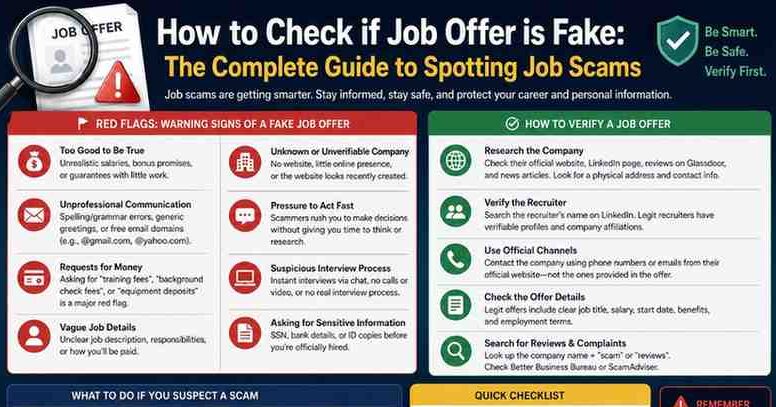






How to check if job offer is fake: The Complete Guide to Spotting Job Scams
Every year, lakhs of job seekers lose money and personal data to fake recruiters. Here’s exactly how to protect yourself — with red flags, real examples, and smart verification steps.
Aapko ek unexpected WhatsApp message aata hai — “Congratulations! You have been selected for a high-paying remote job. Salary: ₹60,000/month. No experience needed.” Sounds exciting, right? But wait. Before you reply, before you share your Aadhaar card, before you pay any “registration fee” — stop and ask yourself: Is this job offer real or fake?
Job scams are one of the fastest-growing forms of online fraud in India and globally. Scammers use fake company names, professional-looking offer letters, and polished websites to trap desperate job seekers. The result? Lost money, stolen identity, and crushed dreams.
In this comprehensive guide, you’ll learn how to check if a job offer is fake, what red flags to watch for, what questions to ask, and how platforms like Gururo help job seekers stay safe and find only verified opportunities.
Why Fake Job Offers Are So Dangerous
A fake job offer isn’t just an embarrassing mistake — it can cause serious harm. Victims report losing anywhere from ₹500 (a small “registration fee”) to ₹2,00,000+ (for fake “training programs” or “equipment deposits”). Beyond money, scammers collect your personal information — name, phone number, bank details, Aadhaar — and sell it or use it for further fraud.
In 2024, India’s cybercrime cells recorded over 14 lakh complaints related to online job fraud. Many victims were first-time job seekers or people who had recently lost their jobs. Scammers deliberately target people at their most vulnerable moments.
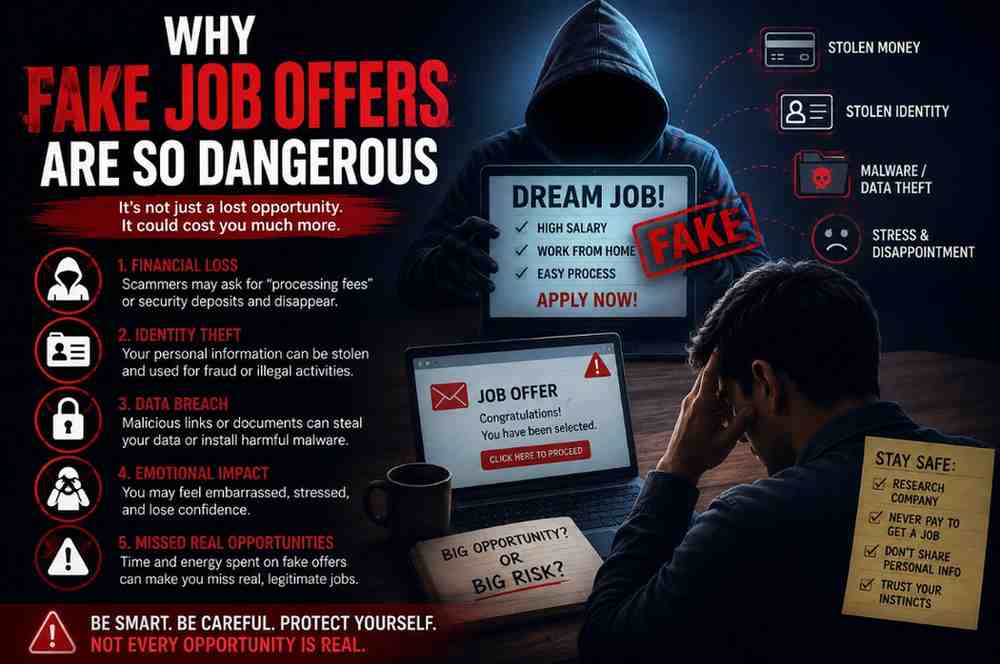
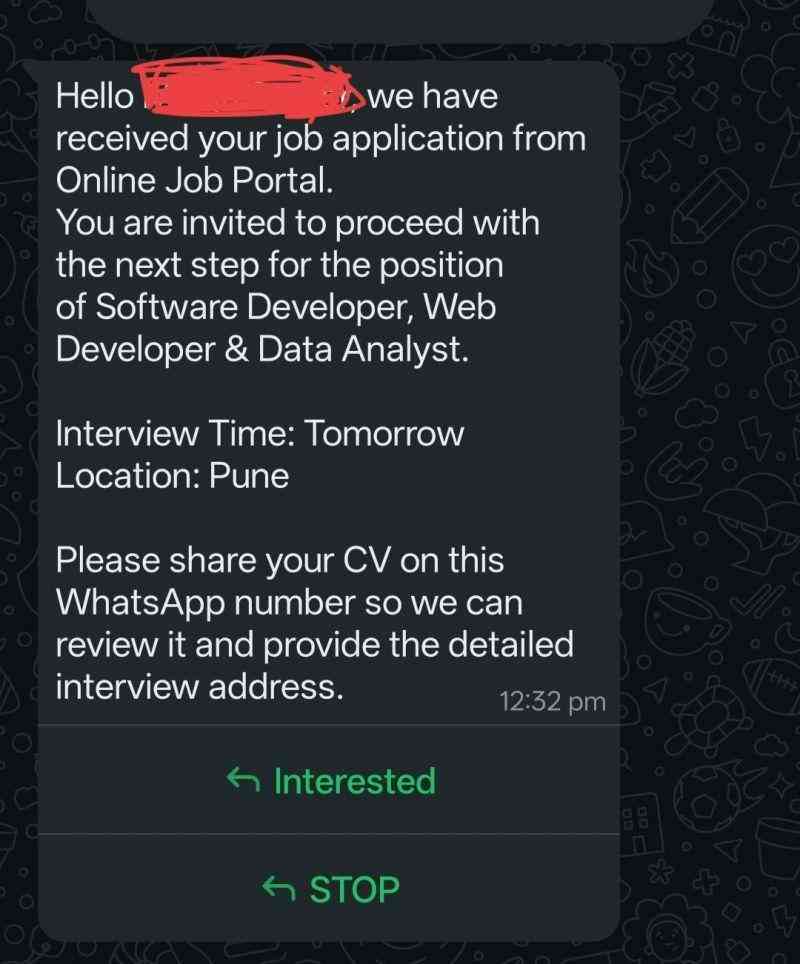
The most targeted platforms for fake job offers are WhatsApp, Telegram, LinkedIn (fake profiles), and bulk SMS. If an offer arrives on these channels from an unknown contact, treat it with extreme suspicion.
Top 10 Red Flags of a Fake Job Offer
Learning to identify the warning signs is your first line of defense. Here are the most common red flags that tell you a job offer is fake:
- They ask for money upfront. Legitimate employers NEVER ask you to pay a registration fee, training fee, security deposit, or background check fee. Any request for money is an immediate scam signal.
- Salary is unrealistically high. “₹80,000/month, no experience, work from home, 2 hours/day” — if it sounds too good to be true, it is. Real jobs match market rates.
- No formal interview. You were “selected” without any interview, test, or screening. Real companies evaluate candidates thoroughly.
- Grammar mistakes and unprofessional email. Spelling errors, broken English, and generic Gmail/Yahoo IDs (like hr.recruiter2024@gmail.com) are huge warning signs.
- Vague job description. The role is never clearly explained — just buzzwords like “data entry,” “online work,” or “marketing assistant” with no real responsibilities listed.
- Pressure to decide immediately. “Offer expires in 24 hours!” — scammers create urgency to stop you from thinking clearly.
- They ask for personal documents early. Asking for Aadhaar, PAN, bank account, or passport photos before you’ve even signed a proper contract is a serious red flag.
- Company can’t be verified online. Google the company name. If there’s no official website, no LinkedIn page, no registered address, or if the website was created recently — be very suspicious.
- Contact only through WhatsApp or Telegram. Real HR teams use official company email and phone numbers, not personal messaging apps.
- The offer letter looks unprofessional. Wrong fonts, missing company logo, no HR signature, no CIN number, and generic language are signs of a forged document.
Real Life Examples of Fake Offer Letter
Priya, a fresh graduate from Pune, received a WhatsApp message claiming to be from “Amazon Work From Home Team.” She was told she’d earn ₹35,000/month doing product reviews. To “activate her account,” she had to pay ₹1,500. She paid — and never heard from them again. The “Amazon” contact was using a personal Gmail ID.
Rahul from Delhi received an offer letter from “Infosys Technologies Ltd” (note: the real company is “Infosys Limited”). The letter looked official, had a logo, and mentioned a ₹12 LPA salary. When he joined what he thought was the onboarding call, they asked him to pay ₹8,000 for a “background verification kit.” He almost paid before a friend pointed out the company name was slightly wrong.
Ankit was recruited for a “social media evaluator” job via Telegram. He was asked to like YouTube videos and rate products, earning small commissions initially — which he actually received. This built trust. Then he was asked to “invest” ₹15,000 to unlock higher-paying tasks. He never got that money back. This is called a “task scam” and is extremely common in 2024–25.
These examples show that scams come in different shapes. Some are crude; some are sophisticated. The key is to verify before you trust.
How to Verify if a Job Offer is Genuine — Step by Step
If you’ve received an offer and want to check whether it’s legitimate, follow these steps:
1. Google the company thoroughly. Search for “[Company Name] + reviews + scam + India.” Check sites like Glassdoor, AmbitionBox, and Indeed for employer reviews. Look for a registered office address.
2. Check the MCA (Ministry of Corporate Affairs) portal. Go to mca.gov.in and search the company name under “Company Search.” Registered companies will appear with their CIN number and registered address. If the company doesn’t show up — it may not legally exist.
3. Verify the HR’s email domain. If the offer is from “careers@amazon.in” — that’s legitimate. If it’s from “amazon.hr2025@gmail.com” — that’s a scam. Real companies use their own domain name in emails.
4. Call the company’s official number. Get the phone number from the company’s official website (not from the email or message). Call HR directly and ask if a recruitment drive is underway.
5. Check the company’s LinkedIn page. Does the company have a LinkedIn presence? Does the HR person who contacted you appear as an employee there? Fake recruiters often have brand-new or empty LinkedIn profiles.
6. Never pay anything. This is non-negotiable. If anyone asks you to pay for interviews, training, ID verification, or background checks — walk away immediately. Legitimate employers bear these costs themselves.
7. Use trusted job platforms. Apply through platforms like Gururo, Naukri, LinkedIn, or Indeed — where employers are verified and listings are reviewed. Gururo in particular has built a reputation for connecting students and freshers with genuine, vetted opportunities.
Before applying anywhere, always visit the company’s official website directly by typing the URL yourself — don’t click links in emails or WhatsApp messages. Scammers create near-identical fake websites (e.g., “infosys-careers.net” instead of “infosys.com”)
Questions to Ask a Recruiter to Check Authenticity
🔍 10 Smart Questions That Expose Fake Recruiters
- Can you give me the official company website and your work email address?
- What is the company’s CIN (Corporate Identification Number)?
- What is the full job description, reporting structure, and team size?
- Will there be a formal interview process? If so, how will it be conducted?
- Why was I selected without an interview?
- Is there any fee I am expected to pay at any stage of the hiring process?
- Can I speak to someone from the hiring manager’s team directly?
- What is your employee ID or LinkedIn profile URL?
- Can you send the offer letter on company letterhead with a physical address?
- Can you share references of other employees who joined recently?
A legitimate recruiter will answer all these questions without hesitation. A scammer will dodge, deflect, create urgency, or suddenly become hostile when asked for specifics.
How Gururo Helps You Find Safe, Verified Opportunities
One of the best defenses against fake job offers is to use platforms that do the verification work for you. Gururo is a career platform that has emerged as a trusted resource for students, freshers, and professionals looking for genuine job opportunities and skill-building.
Unlike job boards that allow anyone to post listings, Gururo verifies the credentials of employers and course providers before listing them. This means when you find an opportunity on Gururo, you know it has passed a quality and authenticity check — something you can’t assume with random WhatsApp forwards or bulk recruitment emails.
Beyond job listings, Gururo also provides career guidance and learning resources that help job seekers understand what legitimate hiring processes look like — so they can spot the difference when something feels off. In a job market full of noise, platforms like Gururo serve as a trusted filter.

Fake Offer Letter: How to Spot a Forged Document
Sometimes scammers go to the trouble of sending a forged offer letter that looks surprisingly real. Here’s how to tell the difference:
No company CIN or registration number mentioned anywhere in the document.
Wrong or generic company address — check it on Google Maps. Does the building exist? Is it really a corporate office?
No authorized HR or legal signatory — real offer letters are signed by named HR managers with designation and employee ID.
Low-resolution or misaligned logo — copied from the internet and pasted awkwardly into a Word document.
No mention of joining formalities — BGV process, document list, joining date details are missing or vague.
The salary or title doesn’t match industry norms — e.g., “Senior Software Engineer, 3 LPA” or “Data Entry Intern, 1.5 LPA per day.”
If you receive an offer letter and want to double-check, call the company’s official HR department directly (number sourced from their official website, not the letter) and ask them to confirm the offer reference number.
The Golden Rules: How to Stay Safe From Fake Job Offers
✅ Always apply through verified, reputed platforms like Gururo, Naukri, LinkedIn, or company career pages directly.
✅ Never pay any amount at any stage of recruitment — not ₹100, not ₹10,000.
✅ Verify every company on MCA.gov.in before sharing any documents.
✅ Trust your instincts — if something feels off, it usually is.
✅ Ask detailed questions. Legitimate recruiters welcome them; scammers resist them.
✅ Never share Aadhaar, PAN, or bank details unless you’ve physically verified the employer.
✅ Check the email domain — @gmail, @yahoo, @outlook are red flags for corporate recruiters.
✅ Research the recruiter on LinkedIn before accepting any communication.
✅ Do not click links in unsolicited job offer messages — they may be phishing links.
✅ Stay updated with the latest scam tactics — follow platforms and communities like Gururo that regularly share safety alerts.
FAQ: How to Check if a Job Offer is Fake
1. How can I check if a job offer is fake?
You can identify a fake job offer by checking for common warning signs such as requests for payment, unofficial email addresses, poor grammar, unrealistic salary promises, or interviews conducted only through WhatsApp or Telegram. Always verify the company’s official website, LinkedIn presence, and recruiter details before accepting any offer.
2. What are the biggest red flags of a fake job offer?
Some major fake job offer red flags include:
- Asking for registration or training fees
- Offering extremely high salaries for minimal experience
- No proper interview process
- Fake HR email IDs like Gmail or Yahoo accounts
- Pressure to join immediately
- Requests for personal documents too early
Scammers often create urgency to prevent candidates from verifying details.
3. Do real companies ask candidates to pay money?
No legitimate company asks candidates to pay money for interviews, job confirmation, laptop setup, security deposits, or onboarding. If any recruiter demands payment before hiring, it is likely a job scam.
4. How can I verify whether a company is genuine?
To verify a company:
- Check the official website and domain email
- Search the company on LinkedIn and Google
- Read employee reviews on Glassdoor
- Verify company registration details
- Contact the company directly through official channels
A genuine employer will always have a professional online presence.
5. Are WhatsApp job offers real or fake?
Most unsolicited job offers received through WhatsApp are suspicious, especially if they promise quick hiring, high salaries, or remote work without interviews. While some recruiters may initially contact candidates on WhatsApp, legitimate companies still conduct formal interviews and send official documentation through company email domains.
6. Can fake recruiters use LinkedIn profiles?
Yes, scammers often create fake LinkedIn recruiter profiles to appear trustworthy. Always verify the recruiter’s employment history, connections, company page, and email domain. Fake recruiters usually have incomplete profiles, low engagement, or recently created accounts.
7. How do scammers create fake offer letters?
Scammers copy company logos, templates, HR signatures, and branding from real organizations to create convincing fake offer letters. Some even use forged documents that look highly professional. That is why candidates should always verify the offer directly with the company.
8. How can freshers avoid fake job scams?
Freshers can avoid job scams by applying through trusted job portals, researching companies carefully, avoiding paid job offers, and verifying recruiters before sharing documents. Learning basic job scam awareness is essential for safe job searching in 2026.
Conclusion: Stay Alert, Stay Safe
A job offer is one of the most exciting things a person can receive — it represents hope, a new beginning, a better future. Scammers exploit that hope deliberately. But now you’re equipped to fight back.
Remember: legitimate jobs don’t require you to pay money, rush decisions, or hide information from your family. If any of those things are happening, trust your instincts and verify through official channels.
Platforms like Gururo exist to make the job search safer and smarter — use them. Apply through trusted sources, verify everything, ask hard questions, and never let urgency override your judgment.
Your dream job is real — and it won’t ask you to pay ₹2,000 to get it. Stay sharp, stay safe.