
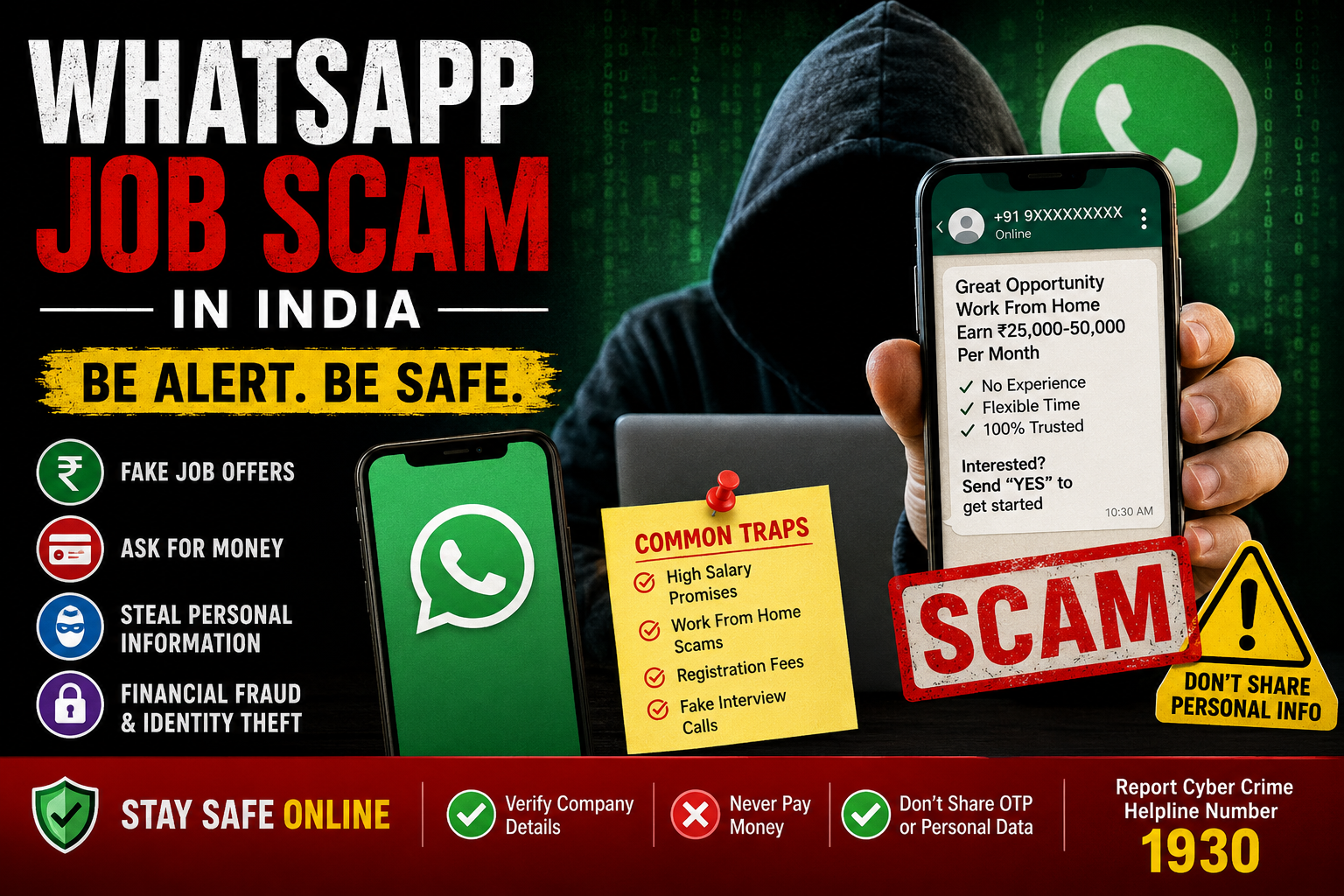






In recent years, WhatsApp has become one of the most popular communication platforms in India. Millions of people use it daily for chatting, business communication, online learning, and job searching. Unfortunately, scammers have also started using WhatsApp to target job seekers through fake recruitment messages and fraudulent employment offers.
The rise of unemployment, work-from-home culture, freelancing opportunities, and online recruitment has created an environment where cybercriminals can easily trap innocent people. Many individuals, especially students, freshers, and unemployed candidates, become victims of WhatsApp job scams because the offers appear genuine and attractive.
- A typical scam message may promise:
- High salary packages
- Work-from-home jobs
- Data entry jobs
- Part-time online work
- Freelancing opportunities
- International job offers
- Instant hiring without interviews
These fake recruiters often pretend to represent well-known companies and ask candidates to pay registration fees, training charges, or document verification fees. Once the payment is made, the scammer disappears.
This article explains everything about WhatsApp job scams in India, including how they work, common types of scams, warning signs, real impacts, prevention methods, and FAQs. If you want to learn about other recruitment frauds, read our guides on Telegram Job Scam in India and Internship Scams in India.
What is a WhatsApp Job Scam?
A WhatsApp job scam is a type of cyber fraud where scammers use WhatsApp messages or calls to offer fake job opportunities to people. Their main goal is to steal money, personal information, or banking details from victims.
- Scammers usually contact users through:
- Unknown international numbers
- Fake recruiter profiles
- WhatsApp groups
- Forwarded messages
- Telegram and social media links connected to WhatsApp
- The scammer may claim to be from:
- Multinational companies
- IT firms
- E-commerce companies
- Banks
- Government organizations
- Recruitment agencies
The message often sounds professional and urgent, making the victim believe the opportunity is real.
Why WhatsApp Job Scams are Increasing in India
There are several reasons behind the rapid increase in WhatsApp recruitment scams in India.
1. High Demand for Jobs
India has a large population of students, graduates, and job seekers. Many people search for quick employment opportunities online, which scammers exploit.
2. Growth of Remote Jobs
After the COVID-19 pandemic, work-from-home jobs became very common. Scammers use this trend to offer fake remote jobs with flexible timing and high salaries.
3. Easy Access to Mobile Numbers
- Cybercriminals collect phone numbers through:
- Online job portals
- Social Media
- Public database
- Fake surveys
- Leaked data
4. Lack of Cyber Awareness
Many people are unaware of online fraud techniques. Freshers and inexperienced job seekers trust messages without verification.
5. Fast Communication Through WhatsApp
WhatsApp allows instant messaging, voice calls, document sharing, and group communication, making it easier for scammers to approach multiple victims quickly.
Common Types of WhatsApp Job Scams in India
1. Fake Work-from-Home Jobs
- Scammers offer easy online work such as:
- Typing jobs
- Captcha filling
- Data entry
- Survey completion
- They promise daily earnings but later ask for:
- Registration fees
- Software charges
- Security deposits
- After receiving payment, they disappear.
2. Task-Based Earning Scams
- Victims are asked to complete small online tasks like:
- Liking YouTube videos
- Rating hotels
- Writing reviews
- Following social media pages
Initially, scammers may pay a small amount to gain trust. Later, they ask victims to invest money for “premium tasks” with higher profits. Eventually, victims lose large amounts of money.
3. Fake International Job Offers
- Scammers claim to provide jobs in countries like:
- Canada
- Dubai
- Singapore
- United Kingdom
- Australia
- They ask for:
- Visa processing fees
- Document verification fees
- Medical test charges
- The job and company are completely fake.
4. Recruitment Agency Scams
Fraudsters pretend to be HR professionals from famous companies and conduct fake interviews through WhatsApp chats or calls.
- Victims receive:
- Fake offer letters
- Fake appointment letters
- Fake employee IDs
Afterward, they are asked to pay onboarding or training fees.
5. OTP and Banking Fraud
- Some scammers ask candidates to share:
- OTPs
- Aadhaar details
- PAN card numbers
- Bank account information
- This information is then used for financial fraud and identity theft.
How WhatsApp Job Scammers Operate
Understanding scam techniques helps people stay alert.
Step 1: Initial Contact
Victims receive a message such as:
“Congratulations! Your profile has been selected for a part-time work-from-home opportunity with a salary of ₹30,000 per month.”
The message creates excitement and urgency.
Step 2: Building Trust
- The scammer:
- Uses professional language
- Shares fake company logos
- Sends fake offer letters
- Uses recruiter profile pictures
- Sometimes they create fake LinkedIn profiles or websites.
Step 3: Asking for Money
- The victim is asked to pay for:
- Registration
- Training
- Software installation
- ID card
- Security deposit
- Payments are usually requested through:
- UPI
- Wallets
- Bank transfer
- Gift cards
Step 4: Disappearing
- Once payment is made:
- The scammer blocks the victim
- The number becomes unreachable
- Fake websites disappear
Warning Signs of a WhatsApp Job Scam
Recognizing warning signs can prevent financial loss.
1. Unrealistic Salary Offers
If a company offers extremely high salaries for simple work without interviews or qualifications, it is likely a scam.
- Example:
- ₹50,000 for typing work
- ₹5,000 daily for liking videos
2. No Proper Interview Process
- Real Companies conduct:
- Interviews
- Skill tests
- Verification
- Scammers often hire instantly.
3. Asking for Payment
Legitimate employers never ask candidates to pay money for jobs.
- If someone asks for:
- Registration fees
- Training fees
- Joining charges
- it is a major red flag.
4. Messages from Unknown International Numbers
- Many scams originate from foreign numbers with country codes like:
- +1
- +44
- +62
- Be careful when receiving random job offers from unknown numbers.
5. Poor Grammar and Spelling
- Fake recruiters often send messages with:
- Grammar mistakes
- Typing errors
- Unprofessional formatting
6. Pressure to Respond Quickly
- Scammers create urgency by saying:
- “Limited vacancies”
- “Apply immediately”
- “Offer expires today”
- This prevents victims from verifying information.
Real Impact of WhatsApp Job Scams
These scams affect victims financially, emotionally, and psychologically.
Financial Loss
- Victims may lose:
- Savings
- Salary money
- Student funds
- Some people lose thousands or even lakhs of rupees.
Identity Theft
- Scammers misuse:
- Aadhaar cards
- PAN cards
- Bank details
- This can lead to loans or fraud in the victim’s name.
Emotional Stress
- Victims often experience:
- Anxiety
- Depression
- Embarrassment
- Loss of confidence
- Freshers may feel discouraged while searching for jobs.
How to Verify a Job Offer
1. Check the Official Company Website
- Visit the company’s official website and verify:
- Careers page
- HR contact details
- Recruitment announcements
2. Verify Recruiter Profiles
- Search recruiters on:
- Company directories
- Official emails
- Professional recruiters usually use company email IDs, not personal WhatsApp numbers.
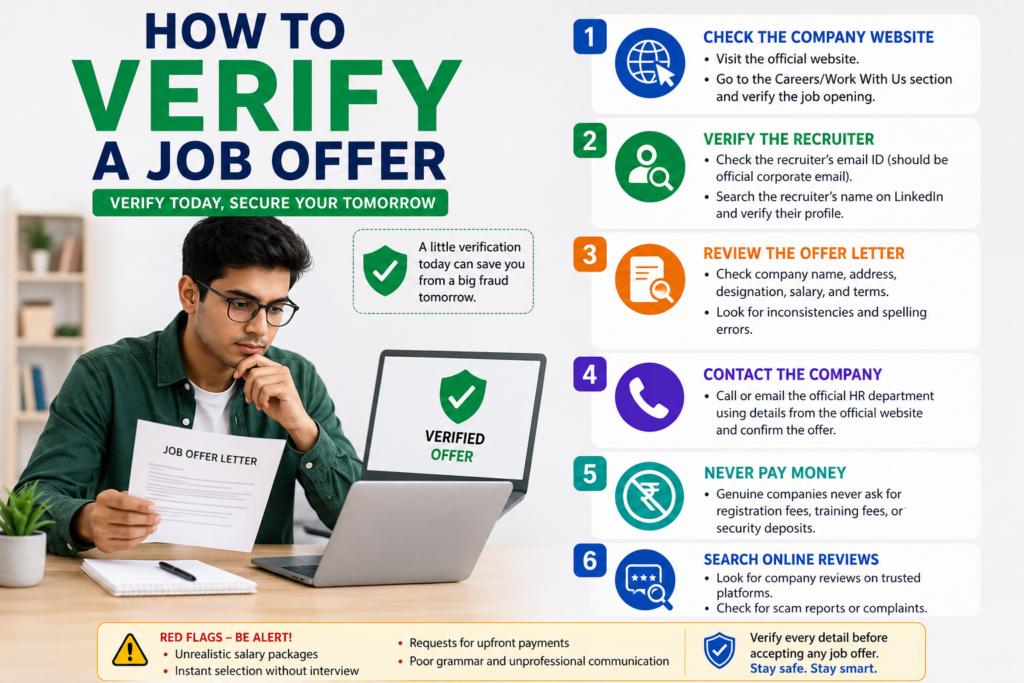
3. Search Online Reviews
- Look for:
- Scam reports
- Complaints
- Online reviews
- Many victims share their experiences online.
4. Contact the Company Directly
Call or email the company to confirm whether the recruiter is genuine.
Before accepting any offer, verify the company through its official website and review online safety recommendations from the WhatsApp Safety
How to Stay Safe from WhatsApp Job Scams
1. Never Pay Money for Jobs
A genuine employer will never ask candidates to pay recruitment fees.
2. Do Not Share Sensitive Information
- Never Share:
- OTPs
- Bank details
- Debit card information
- Passwords
3. Enable WhatsApp Security Features
- Use:
- Two-step verification
- Privacy settings
- Fingerprint lock
4. Block and Report Suspicious Numbers
- WhatsApp allows users to:
- Block scammers
- Report spam accounts
- This helps prevent future fraud.
5. Use Trusted Job Portals
- Apply through trusted platforms such as:
- Naukri
- Indeed
- Company websites
Role of Cybercrime Authorities in India
Indian authorities are actively working against cyber fraud.
National Cyber Crime Portal
Victims can report scams through the Indian cybercrime portal.
Cyber Crime Helpline
India’s cybercrime helpline number:
- 1930
Immediate reporting increases the chances of recovering money.
Government Awareness Initiatives
- The Indian government regularly spreads awareness through:
- Social media campaigns
- Cybersecurity programs
- Educational workshops
- Banks and telecom companies also send fraud awareness messages.
Role of Social Media Platforms
- Platforms like WhatsApp are improving safety through:
- Spam detection
- Account banning
- Reporting systems
- Privacy updates
- However, user awareness remains the strongest defense.
Importance of Cyber Awareness Among Students and Freshers
Students and fresh graduates are common targets because they actively search for jobs online.
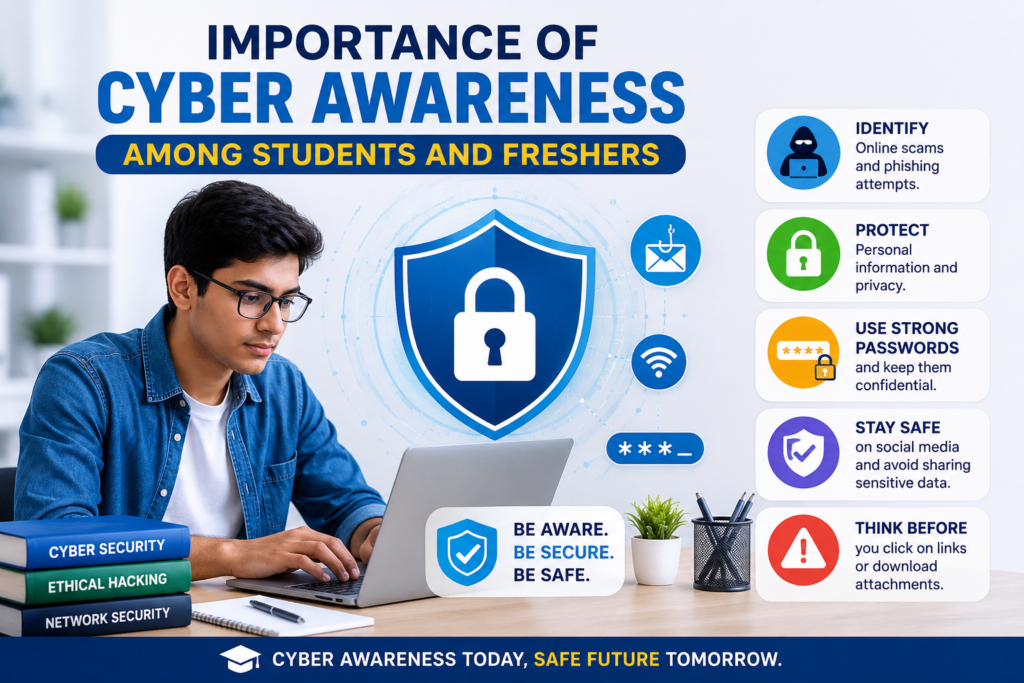
- Educational institutions should teach:
- Cybersecurity basics
- Scam identification
- Online safety practices
- Awareness can significantly reduce fraud cases.
Future of Online Recruitment Safety
As technology evolves, cybercrime methods will also become more advanced. Artificial intelligence and fake documents make scams look more realistic.
- Future safety measures may include:
- AI-based scam detection
- Stronger verification systems
- Government regulations
- Advanced digital identity checks
- Still, personal awareness will remain the most important protection.
Conclusion
WhatsApp job scams in India are increasing rapidly and affecting thousands of job seekers. Scammers exploit unemployment, urgency, and lack of cyber awareness to steal money and personal information.
People must understand that genuine companies never ask candidates to pay money for jobs. Verifying recruiters, avoiding suspicious links, and protecting personal information are essential steps for staying safe.
Cyber awareness, careful verification, and responsible online behavior can help individuals avoid becoming victims of fake recruitment scams. By educating students, freshers, and job seekers, India can reduce the impact of online job fraud and create a safer digital environment for employment opportunities.
FAQs
What is a WhatsApp job scam?
A WhatsApp job scam is an online fraud where scammers offer fake jobs through WhatsApp messages to steal money or personal information.
How do scammers contact victims?
Scammers usually contact victims through:
- WhatsApp messages
- Calls
- Job groups
- Social media advertisements
Are work-from-home job offers on WhatsApp fake?
Not all are fake, but many scams use work-from-home offers to trap victims. Always verify the company before applying.
Do real companies ask for registration fees?
No. Genuine companies never ask candidates to pay money for recruitment
What should I do if I receive a suspicious job message?
You should:
- Avoid replying
- Block the number
- Report the account
- Verify the company independently