





Table of Contents
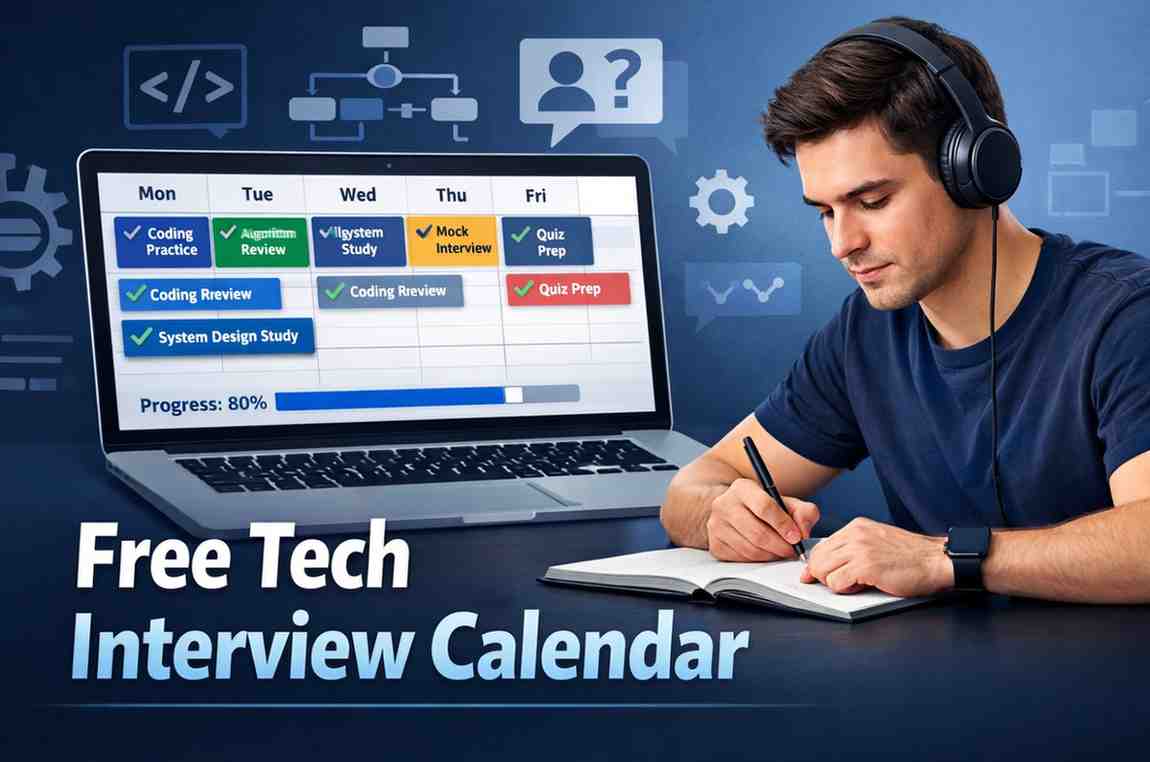
Free Tech Interview Calendar planning is essential for landing a tech job at a top company like Google, Amazon, or Microsoft, where technical interviews demand meticulous preparation. For many candidates, the process feels overwhelming—where do you start, and how do you stay on track? A free tech interview calendar acts as a powerful roadmap, breaking the entire preparation journey into clear, manageable weekly tasks. This guide provides a comprehensive, step-by-step weekly tech interview practice planner to help you stay organized, focused, and confident. Packed with actionable insights, real-world examples, and free resources, this blog will help you build a tech interview preparation calendar that fits your schedule—without spending a single rupee.
Why a Tech Interview Calendar Matters
Technical interviews test a wide range of skills: coding, algorithms, system design, and behavioral fit. Without a structured plan, it’s easy to feel lost or overwhelmed. A tech interview weekly study schedule provides clarity and direction, ensuring you cover all necessary topics systematically. According to a 2024 report by HackerRank, candidates who followed a structured prep plan were 60% more likely to pass technical interviews than those who studied sporadically.
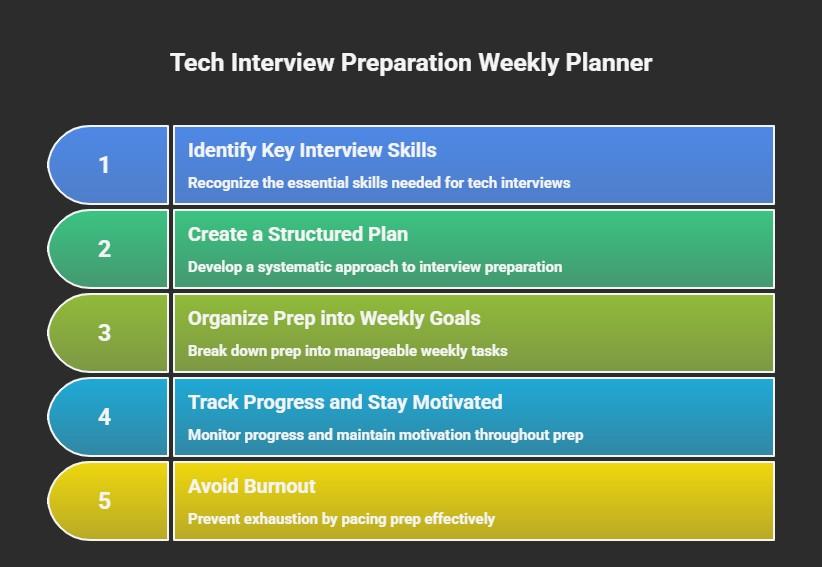
A free coding interview planner is especially valuable for students, self-taught coders, or professionals on a budget. By organizing your prep into weekly goals, you can track progress, stay motivated, and avoid burnout. This blog outlines a technical interview practice planner that’s flexible, actionable, and entirely free, helping you prepare like a pro.
What to Practice Each Week for Tech Interviews
A well-structured tech interview calendar format divides your prep into manageable phases, focusing on different skills each week. Below is an 8-week tech interview preparation calendar tailored for success.
Weeks 1–2: Build a Strong Foundation
Goal: Master the basics of coding and problem-solving.
Focus Areas:
- Learn a programming language (e.g., Python, Java, or C++).
- Study core data structures (arrays, linked lists, stacks, queues).
- Understand basic algorithms (sorting, searching, recursion).
Tasks:
- Solve 20–30 easy problems on platforms like LeetCode or HackerRank.
- Watch free tutorials on YouTube (e.g., freeCodeCamp’s Python course).
- Review time and space complexity (Big-O notation).
Example: A student preparing for a Google interview used freeCodeCamp’s Python course to learn syntax and solved 25 LeetCode “Easy” problems, gaining confidence in arrays and strings.
Tip: Use a free tech interview schedule template like Notion or Google Calendar to log daily tasks and track progress.
👉 Learn How to solve Coding Interview Problems
Weeks 3–4: Deepen Coding Skills
Goal: Tackle intermediate problems and refine problem-solving techniques.
Focus Areas:
- Dive into advanced data structures (trees, graphs, hash maps).
- Practice algorithms like dynamic programming and greedy methods.
- Start timed coding challenges to simulate interview pressure.
Tasks:
- Solve 20 medium problems on LeetCode or Codeforces.
- Participate in HackerRank’s weekly coding contests.
- Review solutions in discussion forums to learn optimal approaches.
Case Study: A 2024 Reddit thread highlighted a candidate who improved their coding speed by 40% after practicing medium-level problems on Codeforces for two weeks.
Tip: Record your thought process while solving problems to practice explaining solutions clearly.
Weeks 5–6: Focus on System Design and Problem-Solving
Goal: Build system design skills and refine coding under pressure.
Focus Areas:
- Learn system design basics (load balancing, caching, databases).
- Practice complex coding problems (e.g., graph algorithms, backtracking).
- Begin mock interviews to simulate real-world scenarios.
Tasks:
- Study free system design courses on Educative.io (e.g., “Grokking the System Design Interview” free sections).
- Watch YouTube channels like ByteByteGo for system design case studies.
- Schedule 2–3 mock interviews on Pramp.
Example: A self-taught coder used ByteByteGo’s free videos to learn about designing a URL shortener, which helped them ace a system design interview at Amazon.
Tip: Create diagrams using free tools like Draw.io to practice system design concepts.
Weeks 7–8: Master Mock Interviews and Behavioral Prep
Goal: Polish your skills and prepare for behavioral questions.
Focus Areas:
- Conduct full-length mock interviews (coding, system design, behavioral).
- Prepare STAR (Situation, Task, Action, Result) responses for behavioral questions.
- Review weak areas and optimize solutions.
Tasks:
- Schedule 4–5 mock interviews on Pramp.
- Use Glassdoor to find FAANG-specific behavioral questions.
- Revisit challenging problems from earlier weeks.
Stats: A 2023 Levels.fyi survey found that candidates who completed 10+ mock interviews were 75% more likely to receive a tech job offer.
Tip: Record mock interviews to analyze your performance and improve communication.
How to Create Your Free Tech Interview Calendar
Creating a free tech interview calendar is simple with the right tools and approach. Here’s a step-by-step guide to build your weekly tech interview practice planner:
- Choose a Platform: Use free tools like Google Calendar, Notion, or Trello to create your calendar. Notion offers customizable templates for tracking tasks.
- Set Weekly Goals: Assign specific topics (e.g., arrays, system design) to each week based on the 8-week plan above.
- Schedule Daily Tasks: Dedicate 1–2 hours daily to coding, 1 hour to system design, and 1–2 mock interviews weekly.
- Track Progress: Log completed problems, mock interviews, and study hours. Use checkboxes or progress bars for motivation.
- Adjust as Needed: Review your progress weekly and shift focus to weak areas.
Example: A student used Google Calendar to schedule 2 hours of LeetCode practice daily, 1 hour of system design study on weekends, and 2 Pramp mock interviews per week, staying on track for a Microsoft interview.
Tip: Download a free downloadable tech interview calendar template from Notion’s template gallery or create one in Google Sheets for easy access.
Best Free Resources for Weekly Tech Interview Practice
To make your tech interview weekly study schedule effective, leverage these free resources:
Coding Platforms
- LeetCode: Offers hundreds of free problems, including FAANG-specific questions. Use the “Explore” section for curated lists.
- HackerRank: Provides free interview prep kits and coding contests. Ideal for beginners.
- Codeforces: Features thousands of free problems and competitive programming contests.
System Design Resources
- Educative.io: Free introductory system design courses with interactive lessons.
- ByteByteGo (YouTube): Free videos on scalable systems like chat apps and recommendation engines.
- Draw.io: Free diagramming tool for practicing system design mock-ups.
Behavioral Interview Tools
- Glassdoor: Access free FAANG behavioral questions and candidate insights.
- Big Interview: Free guides and videos on structuring STAR responses.
Case Study: A 2024 post on X reported that candidates who combined LeetCode with ByteByteGo videos improved their system design performance by 50% in just one month.
FAQ: Your Tech Interview Calendar Questions Answered
What Are the Best Free Resources for Weekly Tech Interview Practice?
LeetCode, HackerRank, Codeforces, and Pramp are top choices for coding and mock interviews. For system design, use Educative.io and ByteByteGo. Glassdoor is ideal for behavioral prep.
How Do I Customize a Tech Interview Calendar for My Schedule?
- Assess Your Time: Allocate 10–15 hours weekly based on availability.
- Prioritize Weak Areas: Focus more time on topics like dynamic programming if needed.
- Use Flexible Tools: Notion or Google Calendar allows easy adjustments.
Can I Get a Printable Tech Interview Planner for Free?
Yes, create a printable planner in Google Sheets or download a free template from Notion’s community gallery.
What’s Included in a Typical Weekly Tech Interview Study Plan?
A typical plan includes:
- Coding: 2–3 problems daily (easy to hard).
- System Design: 1–2 hours weekly on concepts like caching or scalability.
- Mock Interviews: 1–2 sessions weekly on Pramp.
- Behavioral Prep: 1 hour weekly practicing STAR responses.
How Do I Stay Consistent with a Tech Interview Calendar?
- Set reminders in Google Calendar or Notion.
- Join online communities (e.g., Reddit’s r/cscareerquestions) for accountability.
- Reward milestones (e.g., completing 50 problems) to stay motivated
Final Thoughts: Stay Consistent and Succeed
A free tech interview calendar transforms the daunting task of tech interview preparation into a clear, achievable, and well-structured journey. Instead of randomly solving problems or feeling overwhelmed, a tech interview preparation calendar gives you daily and weekly direction, ensuring that coding practice, system design preparation, and mock interviews are balanced effectively. By following a structured tech interview study plan, you can build strong fundamentals in data structures and algorithms, improve problem-solving speed, and develop the confidence needed to perform under real interview pressure.
Using free resources such as LeetCode for coding practice, Pramp for mock interviews, and Educative.io for system design concepts, this free tech interview planner allows you to prepare like a professional software engineer—without spending money. A well-designed tech interview weekly study schedule also helps you track progress, identify weak areas early, and stay consistent over several weeks, which is crucial for long-term success in technical interviews.
Start today by creating your own free tech interview calendar, breaking your preparation into manageable weekly goals, and committing to a daily study routine. As you consistently follow your weekly tech interview practice planner, you’ll notice steady improvements in clarity, confidence, and interview performance. With discipline, the right tools, and a proven tech interview preparation roadmap, landing your dream tech job at top companies like Google, Amazon, or Microsoft becomes not just possible—but achievable.