






Is It Legal to Charge for Jobs in India?
Is it legal to charge for jobs in India? This is one of the most common questions asked by students, freshers, and job seekers. Many candidates receive job offers that require them to pay registration fees, placement charges, training fees, or security deposits before joining. Understanding whether such practices are legal is essential to protect yourself from recruitment fraud and employment scams.
Before learning whether it is legal to charge for jobs in India, you may also want to read our guides on WhatsApp Job Scam in India, Telegram Job Scam in India, and Internship Scams in India to understand common recruitment frauds affecting job seekers.
Understanding Job Recruitment in India
Recruitment is the process through which organizations identify, evaluate, and hire candidates for available positions.
- The recruitment process usually includes:
- Job advertisement
- Application submission
- Screening
- Interview
- Selection
- Offer letter
- Joining process
In a legitimate hiring process, companies invest money to find suitable candidates. Therefore, reputable employers do not normally recover recruitment costs directly from job seekers.
Is It Legal to Charge Candidates for Jobs?
In most situations, asking candidates to pay money simply to get a job is not considered a legitimate employment practice.
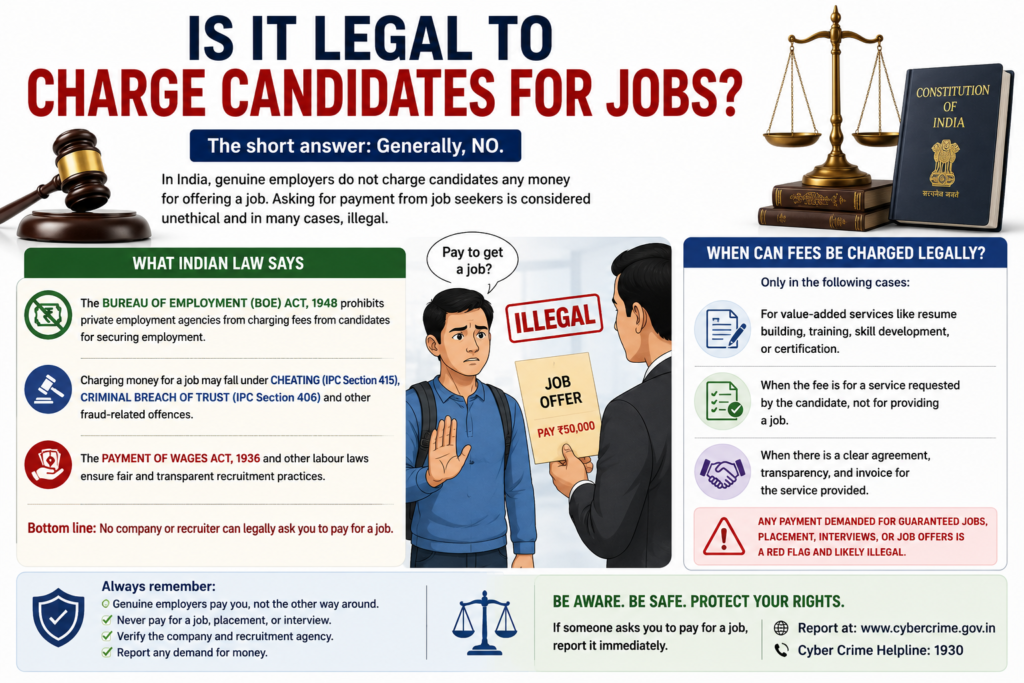
- A company offering employment should not demand:
- Job guarantee fees
- Placement fees
- Interview fees
- Recruitment fees
- Offer letter charges
- Appointment letter fees
- Security deposits for employment
If someone claims:
“Pay ₹5,000 and we will guarantee you a job.”
it is often a warning sign of a fraudulent or unethical recruitment practice.
Employment should be based on qualifications, skills, and merit—not on a candidate’s ability to pay.
What Indian Law Says About Employment Fraud
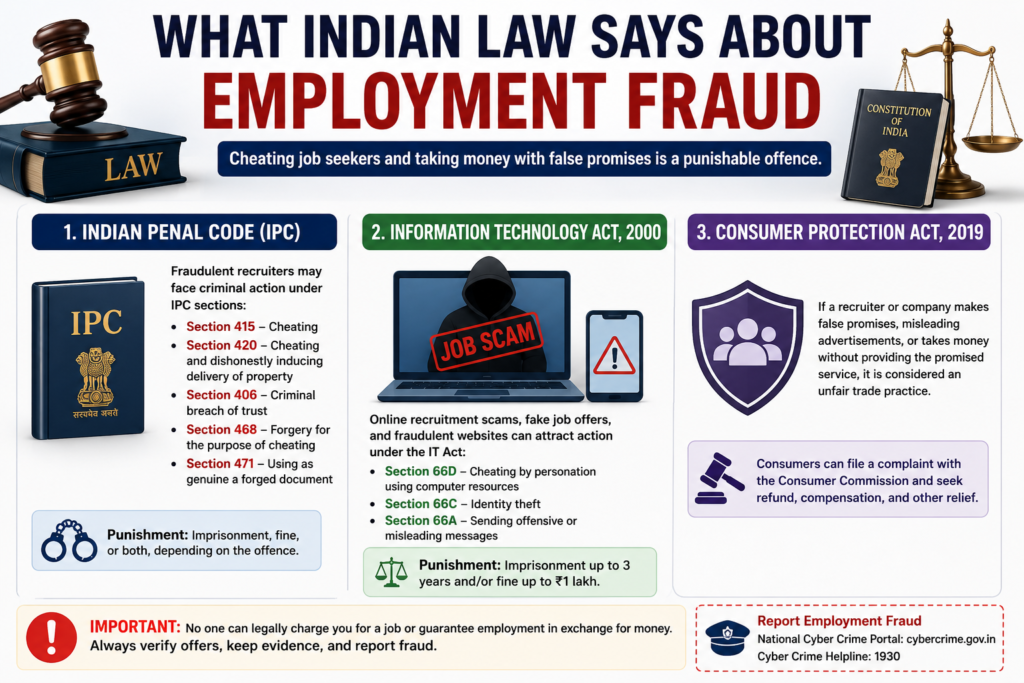
Several laws may apply when someone deceptively collects money from job seekers.
1. Indian Penal Code (IPC)
Fraudulent recruiters may face legal action for:
- Cheating
- Criminal breach of trust
- Forgery
- Misrepresentation
If a person intentionally collects money through false promises of employment, it can attract criminal liability.
2. Information Technology Act, 2000
Many job scams occur online through:
- Telegram
- Social media
- Fake websites
Cybercriminals involved in online recruitment fraud may be prosecuted under provisions related to cybercrime and digital fraud.
3. Consumer Protection Principles
When services are offered using false claims, misleading advertisements, or deceptive practices, legal action may also be possible under consumer protection mechanisms.
Difference Between Genuine Recruitment Services and Job Scams
Many people confuse legitimate recruitment consulting with fraudulent job selling.
Genuine Recruitment Agency
- A legitimate agency:
- Has a registered office
- Provides transparent services
- Explains charges clearly (if applicable)
- Does not guarantee employment
- Follows legal recruitment procedures
Fraudulent Job Scam
- A scammer:
- Guarantees jobs
- Promises unrealistic salaries
- Demands urgent payment
- Uses WhatsApp only
- Provides fake offer letters
- Disappears after receiving money
Common Types of Illegal Job Charging Practices
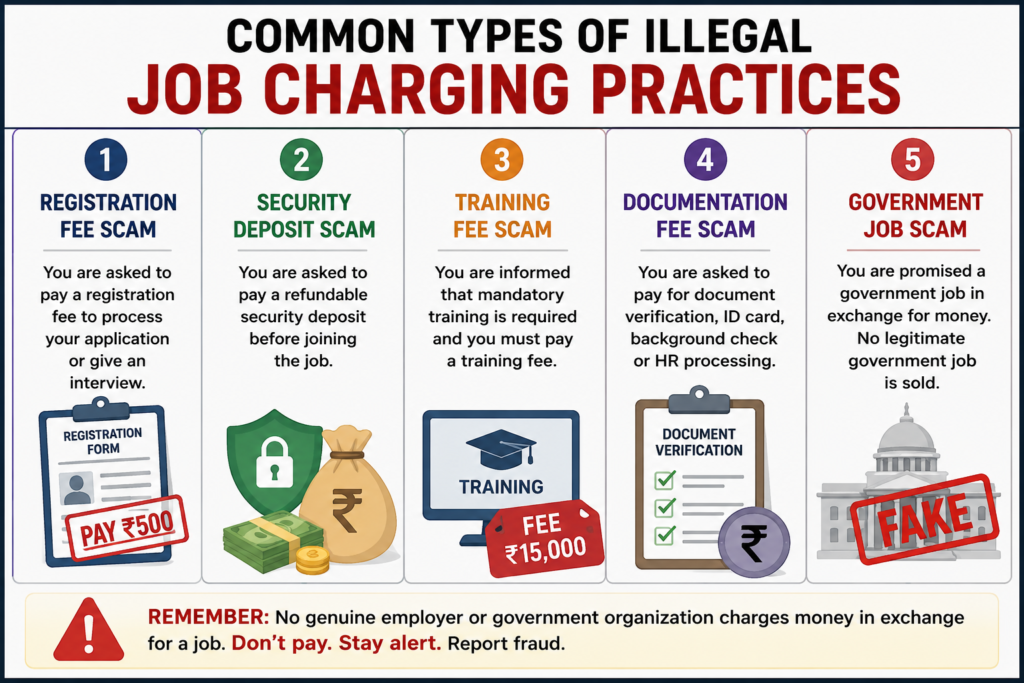
1. Registration Fee Scam
Candidates are told:
“Pay ₹500 registration fee to proceed with the interview.”
After payment, communication stops.
2. Security Deposit Scam
Victims are informed:
“Submit ₹10,000 as a refundable security deposit before joining.”
The promised refund never arrives.
3. Training Fee Scam
Scammers claim:
“You are selected, but mandatory training costs ₹15,000.”
After payment, the candidate never receives employment.
4. Documentation Fee Scam
- Fake recruiters ask for money for:
- Document verification
- Background checks
- Employee ID cards
- HR processing
- These charges are frequently used to deceive job seekers.
5. Government Job Scam
Fraudsters exploit the popularity of government jobs by claiming they can secure positions through payment.
- Examples include fake offers for:
- Railways
- Banking
- Police
- Government offices
- No legitimate government recruitment process allows candidates to buy jobs.
Why Job Charging Scams Are Increasing in India
Several factors contribute to the rise of employment fraud.
High Unemployment
Job seekers facing financial pressure may become vulnerable to attractive offers.
Competition for Jobs
Large numbers of applicants compete for limited positions, creating opportunities for scammers.
Growth of Online Recruitment
- The widespread use of:
- Telegram
- Job portals
- has made it easier for fraudsters to target candidates.
Lack of Awareness
Many students and freshers are unfamiliar with recruitment procedures and may trust fake recruiters.
Warning Signs That a Recruiter Is Charging Illegally
1. Guaranteed Job Promise
No recruiter can guarantee employment before interviews and assessments.
2. Payment Before Interview
Legitimate employers do not require payment before candidate evaluation.
3. High Salary for Simple Work
Offers such as:
- ₹50,000 for data entry
- ₹1 lakh per month without experience
should be treated cautiously.
4. Pressure to Pay Quickly
Scammers often say:
- Limited vacancies
- Last opportunity
- Immediate payment required
to create urgency.
5. No Official Company Email
Professional recruiters usually communicate through official corporate email addresses.
6. WhatsApp-Only Recruitment
A company conducting the entire recruitment process through WhatsApp without formal communication should raise concerns.
Rights of Job Seekers in India
- Every candidate has the right to:
- Fair recruitment
- Transparent hiring practices
- Accurate job information
- Protection from fraud
- Report deceptive recruiters
- Job seekers should never feel pressured to make payments for employment opportunities.
How to Verify Whether a Job Offer Is Genuine
Check the Company Website
- Visit the organization's official website and verify:
- Careers section
- Recruitment announcements
- Contact information
Verify Recruiter Details
- Search:
- LinkedIn profiles
- Company directories
- Official employee listings
Review the Offer Letter
- Check:
- Company logo
- Contact details
- Salary structure
- Terms and conditions
Contact the Organization Directly
Reach out to the HR department using contact details obtained from the official website.
Candidates should also review cybersecurity guidance available on the CERT-In Official Website to stay informed about online recruitment fraud and cyber threats.
What to Do If Someone Asks You to Pay for a Job
Do Not Make Any Payment
Never transfer money simply because someone promises employment.
Request Written Documentation
- Ask for:
- Company registration details
- Official contracts
- Recruiter identification
- Scammers often avoid providing such information.
Verify Independently
Do not rely solely on information provided by the recruiter.
Save Evidence
- Keep records of:
- Messages
- Emails
- Screenshots
- Payment requests
- These may be useful during investigations.
How to Report Job Scams in India
If you suspect recruitment fraud, report it immediately.
National Cyber Crime Portal
Victims can submit complaints through the National Cyber Crime Reporting Portal.
Cyber Crime Helpline
India’s cybercrime helpline:
1930
Immediate reporting may improve the chances of recovery.
Local Police Station
Serious cases involving cheating and financial fraud can be reported to local law enforcement agencies.
Impact of Recruitment Fraud
Financial Loss
- Victims may lose:
- Savings
- Educational funds
- Emergency funds
Identity Theft
- Fraudsters often collect:
- Aadhaar details
- PAN information
- Bank account details
- These may be misused for further fraud.
Emotional Stress
- Victims frequently experience:
- Anxiety
- Depression
- Loss of confidence
- especially after losing money or missing genuine opportunities.
Role of Educational Institutions
- Colleges and universities can help by educating students about:
- Recruitment fraud
- Cyber awareness
- Employment verification
- Online safety
- Career guidance programs should include sessions on identifying fake job offers.
How Companies Can Prevent Recruitment Fraud
- Organizations should:
- Publish recruitment policies
- Verify recruiter identities
- Warn candidates about scams
- Use official communication channels
- Many companies now display notices stating:
- "We never charge candidates for employment opportunities."
Best Practices for Safe Job Searching
- Follow these guidelines:
- Use trusted job portals
- Verify recruiter credentials
- Never share OTPs
- Avoid advance payments
- Research company backgrounds
- Read online reviews
- Report suspicious activities
- Awareness is the strongest defense against recruitment fraud.
Conclusion
Charging candidates money in exchange for jobs is generally not considered a legitimate hiring practice in India. Genuine employers hire individuals based on their qualifications, skills, and experience—not on payments made during recruitment.
While certain professional consulting services may involve transparent service charges, any recruiter demanding money while guaranteeing employment should be treated with caution. Job seekers must verify offers carefully, avoid making payments, and report suspicious activities immediately.
As online recruitment continues to grow, awareness about employment fraud is becoming increasingly important. By understanding your rights and following safe job-search practices, you can protect yourself from scams and focus on genuine career opportunities.
FAQs
Is it legal for a company to charge money for a job in India?
Generally, genuine employers do not charge candidates for providing jobs. Demanding money in exchange for employment opportunities should be treated cautiously.
Can recruiters ask for registration fees?
Legitimate recruitment processes usually do not require candidates to pay registration fees simply to obtain employment.
Are placement fees legal?
Any request for placement fees should be carefully verified. Candidates should understand exactly what service is being provided before making payments.
How can I identify a fake recruiter?
Warning signs include guaranteed jobs, payment requests, unrealistic salaries, and communication only through WhatsApp.
What should I do if I already paid money?
Stop further payments, save evidence, and report the incident immediately through appropriate authorities.